
Garbage Disposal Alternatives for Parker, CO Homes
Alternatives to a traditional garbage disposal include fine-mesh sink strainers, scraping food scraps into the trash, and diverting organic waste to compost – whether that means a countertop bin, a bokashi bucket, a worm bin, or an outdoor tumbler. Many South Denver metro households also use curbside or drop-off food-scrap programs. Each option keeps food out of your drain lines and cuts down on the clogs a disposal so often causes.
1st Choice Pro Services is a licensed, bonded, and insured plumbing and HVAC contractor based in Parker, CO, serving Castle Rock, Castle Pines, Centennial, and Highlands Ranch. We install, repair, and remove garbage disposals throughout the Front Range, so the guidance below reflects what actually protects your plumbing here – not just what sounds eco-friendly.
Why Homeowners Look for Garbage Disposal Alternatives
A disposal is convenient, but it does not make food disappear. It grinds scraps into smaller pieces that still travel through your drain, P-trap, and sewer line. When those pieces mix with grease and the mineral scale common in Denver metro hard water, drain lines gradually narrow and clog. Homes on septic systems – still common in parts of Douglas County outside city sewer – can also overload the tank with extra solids.
On top of that, plenty of Parker-area homes never had a disposal in the first place. Older houses, many apartments, and homes on septic often skip the unit entirely. If yours has failed or you would rather not replace it, the alternatives below handle day-to-day kitchen cleanup just as well.
What Never Belongs in a Disposal – or Any Drain
Before choosing an alternative, know what causes most of the kitchen clogs we get called for. Keeping these items out of the drain is the single biggest thing you can do to avoid a service call, disposal or not:
- Grease, oil, and fat – they cool and harden inside your pipes, catching everything else that flows by.
- Coffee grounds – they clump into a dense sludge that settles in low spots.
- Starchy foods – potato peels, pasta, and rice swell with water and paste together.
- Fibrous foods – celery, corn husks, and onion skins wrap around the impellers and drain walls.
- Bones, fruit pits, and shells – too hard to grind and rough on the unit.
Simple, Plumbing-Friendly Alternatives
Fine-mesh sink strainers
The cheapest and easiest option is a basket or fine-mesh strainer that sits in the drain opening. It catches scraps before they reach your pipes, and you empty it into the trash or a compost bin. For most kitchens, this alone prevents the majority of food-related clogs.
Scrape and toss
Scraping plates and pans into the trash before rinsing keeps solids and grease out of the drain completely. Pair it with a strainer and you have covered the two most common sources of clogged kitchen lines.
Countertop bins and local food-scrap programs
A lidded countertop bin collects peels and scraps until you can move them to compost or a collection program. Many South Denver metro communities offer curbside or seasonal food-scrap drop-off; check with your city or waste hauler to see what is available in Parker, Centennial, or Highlands Ranch.
Composting Options That Suit the Front Range
Composting is the most complete alternative because it turns kitchen waste into something useful for your yard. A few methods work especially well given Colorado’s dry air and cold winters.
Bokashi bins
A bokashi bin ferments scraps in a sealed bucket using bran coated in beneficial microbes. Because the process is anaerobic, it handles meat and dairy that ordinary compost cannot, and it works entirely indoors – handy during a snowy Parker winter when the backyard pile is frozen. After a couple of weeks, bury the fermented material in soil to finish breaking down.
Worm bins (vermicomposting)
Worm bins fit under a sink or in a garage and produce rich castings for houseplants and gardens. Keep the bin between 55°F and 77°F, which usually means bringing it indoors or into a heated garage once Front Range overnight lows drop below freezing.
Outdoor tumblers and piles
An enclosed tumbler or a simple pile handles larger volumes and yard waste. Expect decomposition to slow sharply once daytime temperatures stay below about 40°F, so our freeze-thaw winters can stall a pile for months. Insulating it with straw or dried leaves and turning it on warmer days helps keep some activity going.
Electric countertop composters
These appliances dry and grind scraps into a soil-like material in a few hours. They are the most hands-off choice for small kitchens, though they use electricity and the output still needs to finish in soil or compost before it can feed plants.
Repair, Replace, or Remove Your Garbage Disposal
If you already have a disposal, deciding what to do with it comes down to its condition:
- Repair it if the motor hums but will not spin – usually a jam you can free with the reset button and the hex-wrench slot underneath – or if a leak traces to a loose slip nut or drain connection.
- Replace it if the body itself leaks, the motor has burned out, or the unit is roughly 10 to 12 years old and clogging or tripping the reset constantly. A new unit is often cheaper than repeated repairs.
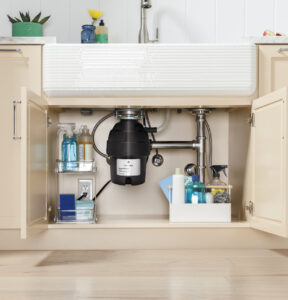
- Remove it if you would rather switch to a strainer-and-compost setup or you are on a septic system. A plumber can take the unit out, reconnect a standard drain and trap, and reroute the dishwasher line safely.
Because a disposal ties into both the under-sink wiring and your drain plumbing, garbage disposal repair and replacement are worth handing to a licensed plumber rather than risking a leak or a shock.
Protecting Your Drains in Hard Water
Whichever route you choose, a few habits go a long way in our hard-water region. Run cold water for a few seconds before and after anything goes down the drain, keep the items in the list above out of the sink, and watch for early warning signs like slow drainage, gurgling, or odors that mean mineral scale and buildup are narrowing the line. Catching a partial clog early is far cheaper than clearing a full backup.
Frequently Asked Questions
Do I actually need a garbage disposal?
No. A disposal is a convenience, not a requirement. A sink strainer plus scraping plates into the trash or a compost bin keeps your drains just as clear, and many Parker-area homes run fine without one.
Is it better to repair or replace a garbage disposal?
Repair a simple jam or a loose connection. Replace the unit if the housing leaks, the motor is dead, or it is more than about 10 years old and failing often – at that point a new disposal usually costs less than ongoing repairs.
Can I remove my disposal without installing a new one?
Yes. A plumber can remove the disposal, install a standard basket strainer and drain assembly, and reroute the dishwasher drain so everything works normally.
Are garbage disposals bad for septic systems?
They add more solids to the tank, which means more frequent pumping. On septic – common outside city sewer in Douglas County – a strainer and composting are usually the gentler choice.
Whether you want to install a new disposal, repair a jammed one, or remove it in favor of a simpler setup, 1st Choice Pro Services can help. Our licensed plumbers serve Parker, Castle Rock, Castle Pines, Centennial, and Highlands Ranch – call 303-841-1448 to schedule service and keep your kitchen drains flowing clear.
Key Takeaways
Moving your sink to an island increases your kitchen’s workflow by centralizing prep and clean-up, diminishing perimeter…
Key Takeaways
Understand typical issues such as drain clogs, incorrect installation, and pump or hose malfunctions to target fixes where…