
Backup Power Solutions for Colorado Homes: Batteries and Generators
Backup power solutions are systems – portable generators, standby generators, and home battery banks – that keep essential circuits running when utility power fails. For homes along the Colorado Front Range, the loads worth protecting first are your furnace or boiler, sump pump, well pump, and refrigerator, because a winter outage can pull indoor temperatures down fast and leave water lines at risk of freezing.
This guide is written for homeowners in Parker, Castle Rock, Castle Pines, Centennial, and Highlands Ranch who want to weigh their options before spending money. The right choice depends on which systems you need to keep alive, whether you run on natural gas or propane, how often your neighborhood loses power, and – at nearly a mile of elevation – how much a fuel-burning generator actually loses to thin air.
Why Backup Power Matters for Colorado Homes
Your Furnace and Boiler Need Electricity
Even gas heat depends on the grid. A gas furnace still needs electricity to run its blower motor, control board, and electronic ignition, and a boiler needs power for its circulator pumps and controls. When the grid goes down during a January cold snap, a gas system with no electricity is just a cold box. Indoor temperatures in a Front Range home can fall below 40°F within hours, and once water lines in exterior walls or an unheated crawl space drop toward 32°F, they can freeze and burst. This is exactly why backup power for your HVAC system during outages is worth planning before the first hard freeze.
Sump Pumps and Well Pumps
Spring runoff and summer thunderstorms can raise the water table quickly. Your sump pump is electric, so an outage during a heavy melt or a storm is exactly when a flooded basement becomes likely. Many rural Douglas County properties also run on a private well, which means no power leaves you with no water at all – including no water to flush a toilet.
Refrigeration and Medical Needs
Keeping a refrigerator cold and any medical equipment running, such as a CPAP machine or an oxygen concentrator, is often the deciding factor in how much capacity a household really needs. Make a short list of the loads you cannot do without before you shop.
Types of Backup Power Systems
Portable Generators
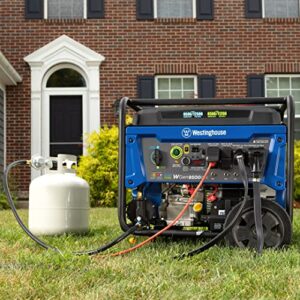
Portable generators run on gasoline or propane and typically produce 3,000 to 8,500 watts. They are the lowest-cost option and, wired through a transfer switch, can carry a furnace, sump pump, refrigerator, and a few lights. They must run outdoors, well away from windows and doors, because they produce carbon monoxide.
Standby (Whole-Home) Generators
Standby units are permanently installed outside, wired into your electrical panel, and fueled by natural gas or a large propane tank. An automatic transfer switch starts them within seconds of an outage, which matters when you are away from home and a sump pump or furnace has to keep working. These systems commonly range from 10,000 to 24,000 watts.
Home Battery Backup
Battery systems store electricity from the grid or from rooftop solar and deliver it silently, with no fuel and no emissions. Home units usually hold 5 kWh to 20 kWh. They are excellent for short outages and for running sensitive electronics, but a large heating or cooling load can drain a small battery quickly.
Sizing Backup Power at Colorado’s Altitude
Parker sits near 5,869 feet above sea level, and thin mountain-West air changes the generator math. Naturally aspirated engines lose roughly 3.5% of their rated output for every 1,000 feet of elevation, so a generator rated at sea level can deliver close to 20% less power here. A unit that looks big enough on paper may fall short once you account for derating, so size up rather than buying to the exact nameplate number.
Plan for starting loads too. Motors draw a surge when they switch on – a furnace blower, an air conditioning compressor, or a 1/2-horsepower sump pump can pull two to three times its running wattage for a second or two at startup. Add up the running watts of everything you want on at once, then leave headroom for those surges. Typical running loads include:
- Gas furnace blower: 600 – 800 watts
- Sump pump (1/2 hp): about 1,050 watts running
- Refrigerator: 150 – 800 watts
- Private well pump (1/2 hp): about 1,000 watts
Transfer Switches and Safe Connection
Never plug a generator into a wall outlet. That practice, called backfeeding, pushes power back onto the utility lines and can electrocute a lineworker who is restoring your service. A transfer switch or a panel interlock kit isolates your home from the grid so power flows only where it should. Manual transfer switches require you to flip them by hand, while automatic transfer switches paired with standby generators do it for you. Any of these connections should be installed to Douglas or Arapahoe County code and inspected.
Maintenance and Winter Readiness
A backup system only helps if it starts when you need it. Run portable and standby generators under load a couple of times a year, keep fuel fresh with stabilizer, and store enough gasoline or propane for a multi-day outage. Cold weather is hard on starting, so keep a standby generator on a battery maintainer and follow the manufacturer’s cold-start guidance for portables. Battery backups lose usable capacity in the cold, so a unit sitting in an unheated garage will deliver less on the exact night you need it most – a conditioned utility room or basement is a better home for one.
Frequently Asked Questions
Will a backup generator run my whole HVAC system?
It can, if it is sized for the load. A gas furnace needs only a few hundred watts, but central air conditioning adds a large compressor surge. A whole-home standby generator handles both, while a small portable may only cover heat, the sump pump, and the refrigerator. If uptime for cooling matters to you, read more about keeping your HVAC system powered during outages before you choose a size.
How long can backup power keep my heat on?
A standby generator on natural gas can run for days as long as gas keeps flowing. Portable units run as long as you have fuel on hand. A home battery sized at 10 kWh may cover a gas furnace and a few essentials for many hours, but far less if it also has to run air conditioning.
Do I really need backup power in the south Denver metro?
Front Range winds, heavy snow, and summer storms all knock out power. If a winter outage could freeze your pipes or a storm could flood a basement with a dead sump pump, backup power protects real property, not just convenience.
Can I install a generator myself?
Placing and fueling a portable generator may be within reach for a handy homeowner, but the electrical connection – the transfer switch or interlock – should be handled by a licensed professional and permitted. Improper wiring is both a fire and an electrocution hazard.
When the power goes out, your comfort and your plumbing go with it, and in Colorado that can mean frozen pipes or a flooded basement within hours. If you want your furnace, boiler, sump pump, or water heater ready to ride out the next outage, the licensed team at 1st Choice Pro Services can assess your heating, cooling, and plumbing loads and help you protect what matters most. Call us in Parker at 303-841-1448 to schedule a visit.

Key Takeaways
Try to determine if the weak flush is due to low tank water, mechanical parts, or a partial clog and note if any waste remains…

Key Takeaways
Hot water tank efficiency, insulation and heat loss. Standby heat loss from your hot water tank is the equivalent of the…