
Colorado Heat Pump Rebates, Tax Credits, and Contractor Resources (2026)
Key Takeaways
-
State, federal and utility incentives can drastically reduce heat pump installation costs in Colorado, so verify your eligibility and shop around programs before you commit to a purchase or contractor.
-
Stack state tax credits, federal tax credits, and utility rebates where permitted to maximize savings. Double check any caps or stacking rules to ensure you won’t hit a surprise limit.
-
Gather required paperwork up front, such as your proof of purchase, contractor installation documentation, equipment efficiency information, and completed application forms to avoid processing delays.
-
Submit through official program portals or through contractors, monitor deadlines, and retain all submission documents and confirmation receipts for follow up.
-
Employ a licensed and experienced heat pump installer. Verify that they’re NPGA-certified and insured to stay eligible for the rebate and ensure proper sizing and installation for Colorado’s climate.
-
To maximize value over time, opt for high-efficiency or cold-climate models, time installations for bonus incentives, and shop around among several quotes to optimize upfront discounts and lifetime energy savings.
Heat pump installation rebates Colorado are discounts that reduce the price of converting to heat pumps in the state of Colorado. State programs, utilities, and local governments offer these rebates and incentives, which can cover fixed amounts or a portion of equipment and labor costs.
These rebates are typically contingent on household income, efficiency metrics, and installer certification. Applicants typically provide receipts and performance information to receive funds.
The meat of it tells you how to locate and apply for existing rebates.
Understanding Rebates
Rebates, tax credits, and upfront discounts are various approaches to reduce the net cost of a heat pump installation. Rebates are usually immediate payments or discounts associated with a particular program. Tax rebates reduce the tax you owe, lowering your bill after you file. Upfront discounts slash the initial price at purchase or installation.
State, federal, and utility incentives are often interoperable. Stacking these can drive down out-of-pocket costs significantly. Programs seek to increase energy efficiency and reduce greenhouse gases by lowering the cost of efficient equipment. Prior to initiating an install, verify qualification criteria, documentation needed, and upfront funding ceilings.
1. State Incentives
Colorado’s state-level programs consist of tax credits and point-of-sale rebates associated with qualifying systems and certified installers. Typical state mandates require that homeowners install systems with at least a certain efficiency rating and sometimes ditch fossil-fuel heating.
Maximum amounts differ by program, ranging from several hundred to a few thousand per eligible system based on system size and efficiency. Most state credits are stackable with federal and utility incentives to maximize savings. Generally eligible systems include air source heat pumps, ductless mini-splits, cold-climate models, and heat pump water heaters that fit listed efficiency requirements.
2. Federal Credits
Federal choices are the Energy Efficient Home Improvement Credit and the Residential Clean Energy Credit. These credits account for a portion of equipment and installation expenses for eligible heat pumps. Rates and caps vary by tax year.
One credit may offset a fixed percentage of qualifying expenses up to a maximum amount per year, while others are aimed at clean energy equipment with varying caps. Credits are claimed with your tax return, so hold on to receipts and manufacturer documentation. These have deadlines and phase‑downs, so check your current tax-year rules as credit amounts can fall over time.
3. Utility Programs
Utility giants, including Xcel Energy and a number of municipal providers, do offer rebate programs. Some provide instant discounts at the time of purchase, while others provide reimbursement after installation and inspection.
Eligibility checks often involve pre-approval or sending in proof of purchase, model numbers, and contractor certification. Rebate size varies by utility and program emphasis; one might compensate more for ductless units, while another might compensate more for whole-home improvements. See final customer savings by comparing program sheets.
4. Eligibility Rules
Most programs require Colorado residency and property ownership. These generally consist of invoices, serial numbers, licensed installer work confirmations and occasionally income verification.
Some rebates are higher for low-income households or are restricted to certain ZIP codes. Others necessitate swapping out gas furnaces or qualifying for minimum SEER/HSPF or ENERGY STAR ratings. Funding ceilings and deadlines sometimes require that they be postmarked by January 31 next year.
5. Qualifying Equipment
To be eligible, units typically include air source heat pumps, cold-climate ASHPs, ducted and ductless systems and heat pump water heaters. Some programs require ENERGY STAR or program-specified efficiency levels.
Always check that your model is on the incentive program’s approved list before purchasing. Rebate funds can be depleted and policies can change, so double-check for remaining availability and stacking guidelines to score the most savings.
The Application
This section details what to prepare and how to apply for heat pump installation rebates and tax credits in Colorado and how to monitor the process so incentives get awarded on time.
Required Paperwork
-
Completed rebate application form: view or print the application form from the program document link. Check the version date.
-
Proof of purchase and installation: itemized invoice or receipt showing equipment model numbers, purchase price in consistent currency, installation date, and installer name. See Sample Receipt for formatting.
-
Permit or contractor proof: Documentation showing qualifying equipment was installed by a licensed contractor or owner-performed with an approved permit. This can be a city permit, inspection document, or contractor affidavit.
-
Energy compliance documentation: paperwork proving the unit meets efficiency or electrification criteria. This might be manufacturer spec sheets, AHRI or other certification numbers, and any program-specific compliance forms.
-
Utility or program-specific forms: Utility rebates often require separate forms or assignment election documents. Attach any utility-specific paperwork as detailed in the program rules document.
-
Identification and property proof:
-
Owner ID
-
Utility account number
-
Proof of property address where the system was installed.
-
Sort these into a checklist and group digital and paper copies. Verify with the individual contest rules document to see if there are additional materials necessary for your particular entry or location.
Submission Process
-
Go with official program portals or forms. Most applications allow you to submit your documents electronically. Some require them to be sent by mail. Simply mail in a rebate application when indicated.
-
Install it through the installer if they provide contractor-assisted filing. A couple accept contractor submission but need owner signature or assignment forms.
-
Check everything twice. Mistyped model numbers or incorrect dates hold up approval. Certain applications have contractor verification or assignment election forms. Add those as necessary.
-
Mail-in submissions need to be postmarked by January 31 of the next year for the rebate. Save copies of everything you send along with any confirmation receipts or tracking numbers. Email questions to [email protected] if unclear.
Approval Timeline
|
Step |
Typical Timeframe |
|---|---|
|
Initial intake and completeness check |
2–6 weeks |
|
Technical review and verification |
4–12 weeks |
|
Final approval and payment |
2–8 weeks after approval |
Depending on program funding, volume of applications and completeness of paperwork, processing times vary. They can come in the form of upfront discounts or be paid later via checks.
Systems have to be in service by 31 December 2025 for the full credit rates. Track status through program portals or customer service and save any documentation for follow-up.
Finding Contractors
Once you’ve found a contractor, a heat pump installation impacts your rebate eligibility, timeline, and system performance. Here’s a tip: begin by filtering candidates to those who are registered or qualified heat pump contractors in Colorado. Many rebates will require a contractor registered with the program or specific certifications.
Official sources like the Colorado Energy Office and Energy Smart Colorado will have lists of approved or experienced installers. They frequently indicate which contractors have partnered with state or utility rebate programs and can highlight specialties like air or ground source heat pumps.
Above all, vet your contractors. Verify state licenses, trade association memberships, and manufacturer certifications. Request evidence and record expiration dates.
Verify GL and WR coverage and ask for policy numbers and certificates of insurance. This safeguards you if a machine gets broken or an employee is hurt. Certified contractors understand the technical requirements associated with rebates, including right size, commissioning, and equipment efficiency, and will be more likely to satisfy them.
Ask for references and see their previous work to determine quality. Request recent projects of similar size and scope to yours, and contact those homeowners whenever possible.
Search for before and after pictures, results, and customer references. Online reviews and ratings bring additional context. Sift for comprehensive reviews that discuss timeliness, cleanup, communication, and if the contractor assisted in completing rebate paperwork.
Personal referrals from friends, family, or neighbors can expedite the search and mitigate risk. Any referral should be followed up by still doing the credential checks.
Pricing and contract structure must be compared carefully. Some contractors provide flat quotes for labor, materials, and permit fees. Others charge hourly plus materials.
Ask for a written breakdown that includes equipment model and efficiency in metric units where possible, expected hours, labor rates, and any likely add-ons. Verify who is taking care of permits, inspections, and the rebate paperwork.
Scope and price misunderstandings are common, so put expectations in writing and secure a clear timeline.
Set expectations up front. Detail desired results such as energy savings goals, noise ceilings, and control options, and inquire how the contractor will test performance post-installation.
Talk maintenance and warranties and come to terms on how change orders will be handled. For systems, you should have bids from a minimum of three contractors to compare approach, price, and confidence in meeting rebate rules.
Maximizing Savings
Straddling rebates, credits and smart choices can lower upfront costs and maximize lifetime savings on a heat pump install. Below, see real world strategies, how stacking works, and the long term financial and environmental worth to anticipate.
-
Install to coincide with limited-time bonus rebates or new incentive rollouts.
-
Go big with high-efficiency or cold-climate heat pumps and receive bigger rebates.
-
Get a minimum of three written quotes from licensed contractors to see how scope, warranties, and installation methods compare.
-
Check for federal, state, and utility incentives prior to signing contracts.
-
Focus on items that provide both rebates and energy savings, like duct sealing or smart thermostats.
-
Apply your upfront rebates to bring down your financed amount and save on interest over the life of the loan.
-
Record equipment models, serial numbers, and invoices to expedite rebate and tax credit claims.
-
Inquire with utilities regarding seasonal programs that could triple rebates for a limited time.
-
Think about whole-home versus single-zone systems. Consider payback and comfort gains.
-
Watch rebate caps and tax credit ceilings when planning stacked rebates.
Stacking Rebates
Homeowners can stack several federal, state, and local rebates if they qualify for each program’s requirements. Others explicitly permit stacking with state and federal programs, further maximizing savings.
Watch for total tax credit caps with combined programs. While IRCC may provide substantial assistance, federal tax credits under the Inflation Reduction Act may still cap amounts in specific ways.
Apply in the optimal order: secure contractor estimates, confirm manufacturer eligibility, submit pre-approval if required, complete installation, and then file rebates and tax credits with full documentation to avoid duplication issues.
|
Program type |
Typical eligibility |
Common caps or limits |
|---|---|---|
|
Federal tax credit (IRA) |
Qualified air-source heat pumps, system cost documented |
30% of system cost or up to 2,000 currency units for some installations; check specific appliance rules |
|
State rebates (Colorado) |
Homeowner residency, system efficiency thresholds |
Varies by program; some programs limit total per-home payouts |
|
Utility rebates |
Utility account holder, pre- and post-install inspections |
Often fixed per-ton or per-unit; may be stacked with state/federal |
|
Local/municipal grants |
Income or location-based eligibility |
Often small, targeted amounts; may add on top of others |
Long-Term Value
Calculate monthly savings based on fuel bills versus heat pump performance. For instance, converting from electric resistance or older gas systems can reduce heating expenses significantly.
Average families experience yearly savings that rapidly make up for residual upfront costs after rebates. Energy savings and stacked incentives can reduce net system cost by thousands. Homeowners save $5,000 to $15,000 on new installations when leveraging available programs.
Home value enhances indoor air quality by eliminating combustion appliances. Contemporary heat pumps are quieter, require less maintenance, and have longer lifespans than their predecessors.
Reduced greenhouse gas emissions support Colorado’s clean heat ambitions and wider climate plans, providing community in addition to individual benefits.
Colorado’s Climate
Colorado’s climate has obvious impacts on heat pump selection and performance. It has low humidity and moderate temperatures overall, but local conditions differ quite a bit. Elevation plays a big role: temperature drops about 1°F for every 1,000 feet of altitude gain. A living room at 2,000 m will experience much cooler temperatures than one at 1,000 m.
The Rockies influence the weather by producing a rain shadow, so eastern plains receive less moisture than mountain valleys. Anticipate significant day-to-night variability, and make sure you’re aware that western and southern regions receive particularly low amounts.
ASHPs perform well throughout much of Colorado, particularly modern cold-climate varieties. Conventional ASHPs see efficiency drop as outdoor temperature decreases, but cold-climate ASHPs maintain a high heating output to much lower temperatures. For a Denver or Colorado Springs homeowner, a cold climate ASHP frequently provides dependable heat through normal winter snaps.
For higher-elevation or mountain properties that experience extreme lows and deep snow, combining an ASHP with a backup or hybrid system can be a smart option. Heat pumps offer heating and cooling, which suits Colorado’s seasonal swings. Summers at lower elevations can be hot and dry, which means that the same unit that heats in winter will cool in summer, minimizing the need for separate systems.
This wide diurnal range makes good control and zoning important. Rooms that cool down quickly at night may need different set points than rooms that stay warm. In semi-arid regions, low humidity results in a reduced latent cooling load, allowing heat pump sizing to more accurately target sensible load calculations.
Correct sizing and installation is key to efficiency and comfort in Colorado’s diverse climates. An undersized unit will run continuously during cold snaps and shorten equipment life. Oversized units will short-cycle, dehumidify less and waste energy. Installers should employ local design temperatures that consider elevation and microclimates, not generic city averages.
The right refrigerant charge, the right airflow, and clearance of the outdoor unit above probable snow drift lines are achievable measures that enhance winter dependability. Check out climate-specific advice for selecting a heat pump type for a Colorado home. Check local utility rebate rules, which occasionally require particular cold-climate performance.
Request system performance curves with heating capacity at low temperatures and references from installs of similar elevation and exposure. Consider cold-climate ASHPs, ground-source heat pumps for steady ground temperatures, or hybrids, where a gas or electric backup activates in deep cold.
Future Outlook
Colorado’s heat pump installation rebate scene is probably going to get bigger as the state transitions to clean, electric heating and cooling. Look for programs linked to the state’s clean energy and electrification objectives to expand in both scale and impact. New funding streams, including federal dollars, are set to aid broader access, but timing is unclear.
Federal money for more residents is coming in winter 2025/2026, but there is no concrete schedule. Planners should factor that uncertainty in. Expect bigger rebate levels and more eligibility in the short term as new funding arrives. Several named programs are set to influence the market: the High-Efficiency Electric Home Rebate (HEAR) and the Home Energy Performance-Based Whole-House Rebates (HOMES) are expected to roll out in Colorado in 2025.
HEAR is now open to income-qualified households, with a full statewide launch anticipated in spring 2025. HOMES is expected to begin in mid-2025 and will provide rebates based on post-whole-house measured energy savings for improvements. Between these programs, they can increase the overall benefit of putting in heat pumps, particularly for homes that pair upgrades such as insulation, duct sealing, and HVAC replacement.
State and federal policy swings will define incentives past 2025. Tax credits and rebate rules will change. Federal tax credit amounts will decrease in 2026 and again in 2029, so installing in 2025 often gives higher direct savings. Colorado homeowners can receive a tax credit for eligible HVAC upgrades until 2025, while the 25C Residential Energy Efficiency Tax Credit is still available for qualifying improvements through 2032, providing up to 30% of project costs, capped at 1,200.
We want to point out that beginning November 16, 2025, customers will only receive standard rebates until further notice, and after 2025 incentives may vary or expire. These timelines imply that homeowners who can wait until 2025 will likely be able to capture stronger compounded savings from both rebates and tax credits.
How to respond as programs evolve: maintain regular checks on program sites, subscribe to state energy office alerts, and consult certified installers who track rebate changes. If multiple programs are in play, keep your project scope and receipts straight to stack incentives without double-claim problems.
If you’re thinking staged upgrades, make sure they qualify for HOMES when it launches, since whole-house approaches tend to unlock bigger rebates than single-item replacements. Homeowners and advisers should plan with a mix of urgency and prudence. They should aim to complete eligible installations in 2025 when feasible and keep flexibility for incoming federal funds in winter 2025/2026.
Conclusion
Switching to a heat pump in Colorado reduces energy consumption and saves on bills. Local and federal rebates reduce the initial cost. Clear steps make the process easier: check eligibility, collect required documents, pick a licensed installer, and meet program timelines. Opt for a contractor who demonstrates previous installations, provides system sizing information, and assists with rebate documentation. Get steady comfort and steady savings by choosing models that boast high seasonal efficiency and the perfect capacity for your home. Whether in sunny, dry Denver or snowy mountain towns, a well-sized heat pump works all year long. Spend a few minutes comparing rebate options and contractor quotes. Apply now to secure savings and lower your home energy consumption.
Frequently Asked Questions
What rebates are available for heat pump installation in Colorado?
Federal tax credits and state or utility rebates are available in Colorado. Programs differ by county and utility. Check IRA credits and local utility or county incentives for up to date amounts and eligibility.
How do I qualify for a heat pump rebate in Colorado?
Qualification generally means having a qualifying heat pump model, a certified installer, and meeting income or home efficiency requirements. Check your particular program’s requirements before purchase to be certain it qualifies.
How do I apply for a heat pump rebate?
Submit your application to the program provider, whether it’s federal, state, or utility. Most need you to upload receipts, model numbers, and verification that they were installed by a pro. Some provide online portals for quicker processing.
Can I combine multiple rebates and tax credits?
Frequently, yes. These are often stackable with federal tax credits and state and utility rebates. Verify stacking rules per program to ensure you maximize your savings without becoming ineligible.
How do I find certified contractors for heat pump installation?
Search utility or state program contractor lists, licensed HVAC directories, or Energy Star or BPI certified pros. Use several quotes and verify references and licenses.
How much can I expect to save after rebates?
Savings vary based on available rebate amounts, applicable tax credits, system size, and energy consumption. Rebates can drop upfront costs dramatically. Long-term energy savings vary based on your home’s efficiency and your climate.
Do Colorado’s climate conditions affect heat pump performance?
Yes. Most Colorado regions are well suited to modern cold-climate heat pumps. Select cold-climate models and ensure proper sizing for dependable heating in colder regions.
Key Takeaways
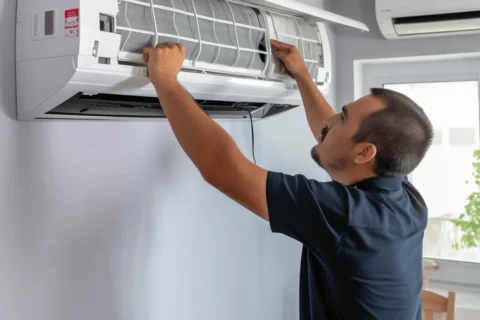
Ductless mini splits in Parker, CO are even more efficient than traditional HVAC in Parker’s high-altitude, dry climate,…
Key Takeaways
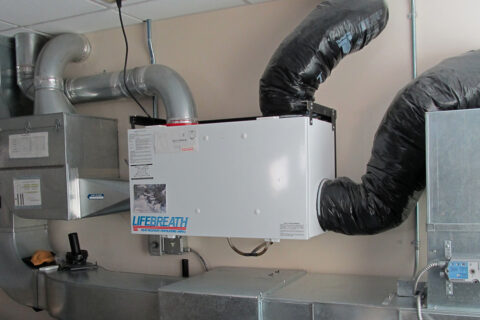
Due to Centennial’s high altitude and arid climate, the indoor air can be very dry. Keep an eye on humidity with a…