
Decoding SEER Ratings: What They Mean for Your Air Conditioning Efficiency
Key Takeaways
-
SEER ratings measure how efficiently an air conditioner cools your home over an average cooling season, helping you compare units and estimate long-term energy savings.
-
The higher the SEER and SEER2 rating, the more energy efficient the unit. Both can result in electric bill savings and a lower environmental footprint, which is critical in hotter regions of the U.S.
-
To discover your AC unit’s SEER rating, check the manufacturer’s label or product manual. Visit the manufacturer’s website for further details, and if you’re uncertain, check with a trusted HVAC professional.
-
This means that proper installation and regular maintenance are critically important to avoid inefficient operation of your system. In fact, good home insulation is as important—or more so—as selecting a high SEER rating!
-
Look at alternative efficiency measurements such as EER and HSPF. Consider comfort, noise, and unit size to get the perfect fit for your home and climate!
-
Finding the balance between upfront costs and long-term savings is key. When you focus on more than just SEER ratings, you can make a better investment in your home’s comfort and resale value!
It indicates how much less energy an air conditioner uses to effectively cool your home. See how SEER can be a more important number than you thought. It tells you how many units of cooling an AC unit delivers per unit of electricity it uses.
In the United States, the relationship between higher SEER ratings and lower energy bills is generally true. This increased efficiency increases comfort – particularly in urban areas that experience very hot summers like Los Angeles, Houston, or Atlanta.
Knowing what SEER means helps people pick an AC that fits their needs, saves money, and meets local and state rules. The following parts will help decode what SEER ratings really tell you. They’ll explain how to read these labels and how these ratings affect your comfort and wallet at home.
What is a SEER Rating?
The SEER Rating, or Seasonal Energy Efficiency Ratio, is the standard that is used to compare air conditioning systems across the U.S. It’s an indication of how efficiently these systems use energy over an entire cooling season. In short, the higher the SEER rating, the more efficiently the AC unit cools the home while consuming less energy.
For buyers and current homeowners alike, understanding a system’s SEER rating isn’t just a numbers game. It deeply concerns electric bills, comfort levels, and achieving energy standards established by organizations such as the Department of Energy.
1. SEER Explained: Simple Terms
SEER indicates how much cooling your AC or heat pump produces. It measures this in relation to the electricity it uses per season. You get this number by dividing the total cooling output (in BTUs) by the total energy used (in watt-hours) over the summer.
If you compare two units—one with a SEER of 14 and another with 20—the higher number means lower running costs over time. In laymen’s terms, the higher the SEER, the more you save while enjoying the same comfort. This is particularly important in cities with long cooling seasons, such as Los Angeles, where costs can escalate rapidly.
2. How SEER Gets Calculated
For AC manufacturers, it’s simple — they test their units in a controlled lab environment, at very specific temperatures. They measure the cooling output, measure the energy used and run the machine through one entire season’s cycles.
The outcome is the one SEER rating you see on product labels. Outside temperature, humidity, and average daily use all factor into the equation. Think of a SEER rating like an efficiency report card for a unit. It is a representation of how efficiently that particular unit will operate considering the average home.
3. Why SEER2 is Emerging
SEER2 represents the latest method of rating efficiency, putting testing more in line with real-world use. The new approach considers increased static pressure, which more closely mimics scenarios found in older ducts or in homes with a more compact design.
It gives you a better sense of what to expect in real-world practice. In fact, SEER2 ratings can now go as high as 25 and above. That means a 20 SEER2 unit is only 43% more efficient than a bare-bones 14 SEER2 unit! This change is crucial for buyers to choose systems that achieve real savings rather than just theoretical savings.
4. Finding Your Unit’s SEER
To check your AC or heat pump’s SEER:
-
Look for the yellow EnergyGuide sticker on the unit.
-
Look on the product manual or the sticker next to the electrical panel.
-
Visit the manufacturer’s website and enter your model number.
-
Contact a qualified HVAC professional if you are uncertain.
SEER’s Real-World Impact on You
SEER, or Seasonal Energy Efficiency Ratio, is more than a metric found on an air conditioner. It ultimately determines how much you pay and how comfortable your home is. What you can do Make climate-conscious choices this election season! For home buyers and owners, understanding what SEER actually means can help you shift your perspective on energy costs and home comfort trends.
Lower Bills, Greener Planet
A higher SEER rating, of course, translates immediately into lower monthly bills. Specifically, a 20 SEER2 unit consumes approximately 43% less energy compared to a 14 SEER2 unit. Lower bills, greener planet That translates to less burden on your bank account, particularly during extended, extreme heat events as often seen in Los Angeles.
Over three to four years, those savings on utility bills more than cover the cost of the upgrade. The Inflation Reduction Act of 2022 further provides tax credits for high SEER units, making the deal even rosier. On the environmental side, consuming less energy translates into lower carbon emissions. A home that operates an energy-efficient, high-SEER AC saves their bottom line and helps mitigate their impact on the environment.
Your Comfort, Your Climate
SEER ratings are related to home comfort. A higher SEER unit maintains a more even temperature throughout your home. It helps maintain the comfort level in your home or office, even when it’s hot outside during a heatwave!
This is especially important in areas that experience months of extreme heat. With less variation in temperatures or humidity, efficient AC systems help prevent uncomfortable hot spots and muggy evenings. The process has yielded a home that is comfortable, even when the weather turns sweltering.
Resale Value: A SEER Perk?
Climate resilience Homes with high SEER AC units are more attractive to buyers. At a time when homebuyers are increasingly seeking features that will save them money and keep them comfortable for years to come, energy efficiency is a real estate market differentiator.
Replacing an outdated one can increase your home’s resale value and help make it more attractive to buyers.
Beyond the SEER Number
SEER, or Seasonal Energy Efficiency Ratio, is the rating used for air conditioners and heat pumps. This is the standard the U.S. Department of Energy first created in 1979. A higher SEER rating means a unit uses energy more efficiently. For new systems, this minimum is now 14 or 15 – depending on the state – and gradually rising over time.
Unfortunately, SEER is only one part of the puzzle. Many other factors are equally as important (if not more so) in determining just how well your air conditioner performs in real life. These factors range from your system’s installation to your maintenance to your home’s configuration.
Installation Quality is Key
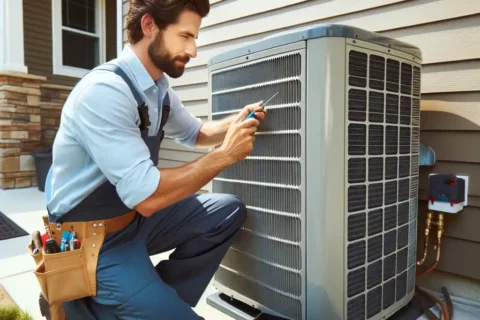
Even the most highly efficient, high SEER unit requires skilled installation hands to ensure it will operate as promised. After all, even the best system can lose its edge if it’s not installed perfectly. Letting poor installation result in leaks, bad airflow, or incorrect refrigerant levels can create an environment of higher bills and less comfort.
Bringing in an experienced HVAC contractor helps ensure the system lines up with your home’s needs. In Los Angeles, where hot days drag on into the night, this can translate to consistent relief and substantial savings. Investing in quality installation upfront saves long-term in repair and reduced energy consumption.
Maintenance: SEER’s Best Friend
Regularly maintaining your AC unit is a necessary step if you expect to maintain those lofty SEER numbers. Basic measures, such as regularly changing filters and ensuring the right amount of refrigerant, help operations run smoothly.
Regular maintenance performed by a professional can prevent minor problems from escalating into major ones. These practices will save you money and extend the life of your equipment.
Home Insulation Matters More
In fact, quality insulation and your air conditioning unit go together perfectly. If your home leaks all that cool air, no matter how high the SEER, the system is doomed to fail.
In an uninsulated home, sealing gaps and boosting insulation are essential measures to hold cooled air in. This reduces energy waste and helps maintain bill affordability, a critical consideration in older LA homes.
Thermostat Habits Affect Efficiency
Your thermostat habits have a big impact on efficiency. Smart thermostats make it easy to align your cooling with your schedule, eliminating waste when nobody is home.
Maintaining temperatures a few degrees higher during the day when you’re away can cut expenses without compromising comfort. Developing good thermostat habits helps you maximize the value of your SEER-rated equipment.
SEER vs. Other Efficiency Metrics
When you consider air conditioner efficiency, SEER is only part of the equation. SEER, or Seasonal Energy Efficiency Ratio, tells you how much cooling you get from each unit of electricity across a whole season. This is analogous to a car’s miles per gallon rating.
So the higher the SEER, the more efficient it is long-term! To get a real sense of how any given HVAC system will operate in your residential or commercial property, you have to look beyond the SEER rating. That’s why it’s important to pit SEER against other important metrics such as EER and HSPF.
EER: A Different Snapshot
EER, or Energy Efficiency Ratio, is another measure of air conditioner efficiency. It only does so in very controlled, constant conditions—mostly when the outdoor temperature is 95°F. Unlike SEER, which smooths out performance over multiple temperatures, EER shows how a system would respond to an immediate wave of summer heat.
For urban areas, particularly those like Los Angeles that are experiencing rapid growth, heat waves present a unique challenge. EER ratings offer the best snapshot of immediate energy consumption. Look up the EER to get an idea of how many watts your AC will draw on a hot afternoon. It’s the one magic number you’re looking for!
HSPF: For Heat Pumps
HSPF, known as Heating Season Performance Factor, is the most critical for heat pumps. It indicates how well the system will heat in the winter months. Particularly if you live in a cold winter climate, HSPF offers useful information.
It shows the energy efficiency of the unit and how much energy it will use to keep you warm. Since SEER is only a measure of cooling, when HSPF is used, it makes it easier to compare total system performance.
Choosing Your AC Wisely
Choosing the right air conditioner goes beyond the sticker price. All of it means you really need to understand what SEER ratings can do for you! A SEER (Seasonal Energy Efficiency Ratio) rating tells you how efficiently an AC unit cools your home. It’s a measure of how efficiently the unit uses electricity.
It operates pretty similarly to miles per gallon for vehicles—higher SEER denotes that the unit cools more per unit of energy consumed. Generally speaking, for the average household, a SEER rating of 15 to 18 is a sweet spot. The right number varies based on your climate, local energy prices, and your AC usage.
Balancing Cost and SEER
Units with higher SEER ratings typically have a higher upfront cost. This increase in cost can be worth it. High-SEER models can save 20% or more in heating and cooling costs over time.
Think about how much you use your AC. Afterwards, consider your budget for the purchase price as well as long-term operating costs. For those consumers, shelling out a little extra upfront translates to larger cost savings in the future.
Matching SEER to Your Region
Where you live matters. In the hotter southern states, the law requires a SEER minimum of 14. At the same time, states in the northern tier need a minimum of 13. If you live in a place where summers are both long and hot, then a higher SEER rating usually is in your best interest.
Look at local energy prices—higher rates can increase the value of more efficient units even more.
Don’t Ignore Unit Size
A properly sized unit is the most efficient. Even with the best SEER in the world, if your AC is oversized or undersized, it will run inefficiently. That can translate into higher bills and lesser comfort.
An HVAC professional can assist you in determining what size is right for your space.
Look Past Just Numbers
SEER is just one piece of the puzzle. Look for features such as quiet modes, smart thermostats, and reliability. Consumer reviews and expert opinions are invaluable as well.
Choose one that meets your needs in multiple ways. This goes beyond energy efficiency and comfort.
SEER: Not the Whole Story
SEER ratings are often the only metric discussed when people are out buying new AC units, that’s not the whole story. SEER, or Seasonal Energy Efficiency Ratio, tells you how efficiently a system cools relative to the energy it consumes. This is a big number, and that’s important, but it’s not the only factor driving your comfort or your monthly expense.
Even the highest-rated 20 SEER system is unable to deliver its advertised performance if it’s not installed right. It fails miserably when combined with old, leaky ductwork. In the United States, the Department of Energy requires that the minimum SEER rating be at least 13. States such as California frequently adopt more stringent standards. Your actual savings will vary based on the real world—specifically where you live, the size of your home, and how you use your system.
Proper installation, consistent maintenance, and effective insulation are all big factors. For example, a properly installed 13 SEER in Los Angeles may perform better than a 20 SEER with a bad installation in a different climate. Variable-speed systems have hundreds of settings that improve comfort and air quality, not just efficiency. They make them more comfortable and deliver more even cooling.
Even moving up from an older unit to a minimal 13 SEER will significantly reduce electricity consumption and associated expenses.
Comfort Features Beyond SEER
Comfort features today go beyond just SEER. Comfort features such as variable speed fans help maintain more consistent cooling while reducing large temperature fluctuations. Humidity control is very important too, particularly in areas with soupy summer weather.
These features make the air more comfortable, not just cooler. It’s intelligent to consider what will improve day-to-day comfort, rather than just chase after the highest SEER.
Noise Levels: A Hidden Factor
There’s another factor, noise, that is just as important. While some systems operate at a noisier level, newer systems can provide quiet, effective cooling that won’t disrupt your daily routine. Consider sound ratings as you select a unit.
A quieter air conditioner helps improve your home’s comfort in every way.
Lifespan and Reliability Concerns
Lifespan and Reliability Concerns SEER doesn’t provide any indication of how long a system will last. Choose reputable brands with a track record and strong warranty. Routine maintenance keeps any system running longer and more efficiently.
Smart, dependable investments yield dividends down the road.
Conclusion
SEER ratings help you understand how much energy your AC uses. Most importantly, they show how that affects your energy bills. For example, in Los Angeles, the incremental cost of a higher SEER results in positive savings. Your house size is a big player too. So is its orientation to the sun and the way you run your AC! It’s useful to compare SEER to other figures, but it’s never the full picture. Choosing the best AC for you requires careful consideration of your needs and your environment. Get smart, get savvy, consult with a good local HVAC professional and verify actual figures. Looking to pay less and stay more comfortable all season long? It’s a good idea to start with SEER, but go a little further before you purchase.
Frequently Asked Questions
What does SEER mean in air conditioning?
What does SEER mean in air conditioning? It’s a way to measure how efficiently your AC uses electricity over the course of a cooling season. The higher the SEER rating, the more efficiently your unit uses energy to cool your Los Angeles home.
How does a higher SEER rating benefit me in Los Angeles?
Better energy efficiency ratings lead to direct savings on energy bills, which is particularly important during California’s long, hot summers. In addition, it lessens your home’s contribution to climate change and can qualify you for rebates from your municipality.
What is a good SEER rating for Los Angeles homes?
What is a good SEER rating for Los Angeles homes? This strikes a good balance between energy savings and upfront costs, taking into account the city’s warm climate and long cooling season.
Is SEER the only factor to consider when choosing an AC?
No. Beyond SEER Consider the unit size, quality of the installation, and other features, including smart thermostats. All of these factors have a big effect on comfort and efficiency, as well.
How does SEER compare to EER?
SEER calculates efficiency across an entire cooling season, whereas EER (Energy Efficiency Ratio) measures efficiency at one specific temperature. SEER is much more useful for predicting annual savings in a climate like Southern California’s.
Can a higher SEER AC really save me money?
Yes. Upgrading from a 10 SEER unit to a 16 SEER unit can cut cooling costs by up to 40%, depending on usage and your home’s insulation.
Does SEER affect indoor comfort?
Yes. Most of the high-SEER units have variable-speed motors. These features keep indoor temperatures from fluctuating too much and keep humidity levels low, which helps keep residents comfortable in LA’s warm climate.

Key Takeaways
Routine maintenance saves expensive breakdowns and keeps your central air in tip-top shape, so book those yearly tune-ups and…
Key Takeaways
Pinpoint typical emergency AC culprits such as refrigerant leaks, filters, thermostats, electrical faults and frozen coils to…