
Washing Machine Drain Overflowing? Causes and Preventive Fixes
Key Takeaways
-
Understand typical issues such as drain clogs, incorrect installation, and pump or hose malfunctions to target fixes where they count and avoid overflow recurrences.
-
Check for and unclog the drain hose, standpipe, and sewer line. Test the washer after each fix to ensure the problem is fixed.
-
Check for proper drain hose height, tight connections, and drain pipe diameter that satisfies contemporary washer specs to prevent siphoning and backups.
-
Stick to manufacturer recommendations and use HE detergent to minimize suds and residue that clog drains.
-
Make a preventative maintenance schedule for cleaning pump filters, flushing lines with hot water or enzymes, and installing lint traps or warning sensors.
-
If issues continue or for older plumbing, have it professionally inspected and upgrade drain lines to accommodate higher flow from newer washers.
When the drain line, pump or trap is blocked or water flow is restricted, a washing machine drain overflows. A washing machine drain overflows due to a clog from lint, soap buildup or small items elevating the water level and blocking flow. Faulty pumps, kinked hoses or improper venting alter pressure and cause overflow. Hose alignment, trap clearing, and filter inspection are simple checks. The meat of the post details plug fixes and when to call a pro.
Root Causes
A washing machine drain can overflow due to common causes like a clogged vent or an undersized pipe problem. The rest of this section outlines the key malfunctions so readers can know what to check and why each issue creates drain backups.
1. Drain Blockages
Clogs develop where lint, soap scum, grease, and general muck amass. The standpipe and drain hose are typical catch points. Lint and detergent residue create a paste that constricts the bore until water can’t flow through it as fast as the washer pumps it out. A plugged main drain pipe will frequently exhibit sluggish draining, gargling, and backups into other fixtures when the washer runs. Partial blockages from tree roots or hard water scale in older sewer lines decrease flow and can allow water to trickle through at low speed, but still overflow during a high-flow wash.
Unclog those drains that are clogged up. If more than one fixture backs up during a wash, the main sewer line is probably implicated. Mechanical snaking or hydro-jetting clears roots and heavy gunk. Periodic manual cleaning prevents soap-lint cakes that choke the system.
2. Installation Faults
Wrong hose height, too-deep hose insertion or undersized drain lines cause overflows. About root causes of malfunctions, the drain hose must be secured at the proper height to prevent siphoning or backflow. If it sits too low or too deep in the standpipe, it can “choke” and flood. Older homes may have 1 or 1.25 inch drains that simply cannot handle today’s washer flow rates. Current recommendations are for at least 1-1/2 inch diameter, with 2-inch lines preferred for newer, high-flow machines.
Inspect for kinks, loose connections, or shared plumbing ties to sinks or disposals that permit cross contamination and slow the system. A taller standpipe or a standpipe extension usually repairs overflow from a short standpipe.
3. Component Failures
A faulty drain pump or clogged pump filter can cause significant drain issues, blocking wash water from draining properly. Small objects, coins, or build-up on the inside of the filter can limit flow even if the pump motor is running. Additionally, internal hoses and seals that leak or crack can direct water to areas it shouldn’t, contributing to overflow danger. Of course, replace worn pumps, hoses, or filters instead of merely patching, ensuring that your drain system functions effectively.
4. Detergent Overuse
Overflow of detergent can lead to stubborn clogs, as excess suds and residue capture lint and impede flow within hoses and standpipes. High-efficiency machines require HE detergent in small amounts to prevent drain issues. Regular rinse cycles and a maintenance wash can help clear the clog and minimize future blockages.
5. Vent Restrictions
Blocked roof vents or vent stacks can lead to drain issues, causing negative pressure and sluggish drainage. When a drain cannot vent, water shifts tentatively, gurgling and backing up. Debris, bird nests, or ice can block vents, but flushing vents restores air flow and smooths water flow, decreasing overflow potential.
Diagnostic Steps
Start by verifying that the plumbing drain line is unobstructed. A clogged drain can lead to water backing up and spilling over, creating a potential drain backup. A targeted, incremental diagnosis assists in distinguishing between washer-side errors and common sewer line problems. Check off pipes, filters, pumps, vents, and hose height as you go with a checklist through the diagnostic steps.
Inspect Pipes
Inspect any exposed drain hose for drips, fractures, or water stains near the washer and floor. Additionally, check your main sewer line, kitchen sink, and basement drain for drain issues like backup or slow draining, which are indicative of a common obstruction. The drain hose height must be between 60 and 90 centimeters from the floor to avoid siphoning or backflow. Look for undersized pipes or partially blocked drains and record pipe diameter and fittings such as a P-trap that may limit flow. Mark areas of standing water or sluggish drainage, prioritizing these for professional drain clearing and note locations and symptoms for future reference.
Check Filters
To prevent drain issues, take out and clean the drain pump filter regularly. Lint, hair, coins, and small debris can create a stubborn clog that blocks flow. It’s essential to check any internal lint filter or mesh strainer within the washing machine, as these diagnostic markers indicate if debris is causing a blockage or if it is remaining in the washer. Additionally, changing broken or missing filters will help maintain proper installation of the drain line. This maintenance reminder to check the drain hose and filters every 3 to 6 months will minimize the risk of future drain backups and overflows.
Test Pumps
Conduct a drain or spin cycle and listen closely for noises, grinding or weak flow that indicate pump issues. Unplug and inspect the drain pump for internal blockages, stuck impellers, or electrical faults. Foreign objects can prevent the pump from transferring water to the drain. Reinstall tight or swap out the pump when it won’t pump water. After each troubleshooting step, test the machine again to verify progress. Test the washer through a complete cycle to confirm the pump and hose height cooperate and overflow is now a thing of the past.
Consider tools like a drain snake for hard-to-reach line blockages, a camera inspection for deep or concealed obstructions, and enzyme treatments for organic buildup. Record every discovery, every course of action, and every test result to see if the problem is confined to the washer or connected to the main sewer line.
Resolve Issues
Begin with the simplest tests first to narrow down the source of your drain issues. Check your drain hose for kinks, buildup, or blockages and observe how your standpipe drains during a complete cycle. If you see suds, consider cutting back on detergent, as too much soap in an HE washer can produce more suds than the clothes can handle, potentially causing a drain backup. If the overflow occurs only when the washer drains, target the washer drain hose and standpipe first, as stubborn clogs from lint, soap, and debris tend to get stuck there and cause drain backups.
Clear all identified clogs using a drain snake, enzyme cleaner, or manual removal.
To address drain issues, take the drain hose out of the washer and peer inside, then flush the line if possible with either a shop vac or a hose. For standpipes and local drain lines, snake or auger about 2 to 3 meters to pull out stubborn clogs like lint bundles and soap scum. While enzyme cleaners are effective on organic buildup, they can be slow; spray them on and wait the suggested amount of time before you flush. For persistent blockages, manual removal with long-nosed pliers or an auger often works. A homeowner found a wad of towel lint 40 cm into the hose, and cutting it out cleared the flow immediately. ALWAYS put a bucket under the hose when you disconnect to catch water.
Repair or replace faulty components such as the drain hose, pump, or filter to restore proper drainage.
Inspect the hose for cracks, soft spots, or splits, which can leak or collapse under pressure and replace it with a rinse-rated hose of appropriate diameter. Additionally, examine the drain pump for blockages, as trapped coins, hair, or small textiles can lead to drain issues by blocking the impeller. Take off the pump cover and rotate the impeller manually; if it resists or has junk caught in it, service or replace it to avoid a clogged drain. If the pump runs but pumps little water, consider getting a new one. Clogged filters diminish flow, so clean them monthly to prevent stubborn clogs. Address problems with manufacturer-recommended replacement components and electrical safety testing.
Adjust the drain hose height and secure all connections to prevent future leaks or backups.
To prevent drain issues, place the drain hose with its outlet at the appropriate standpipe height, typically 60 to 90 cm above the floor for most machines. Ensure the hose is securely attached with a clip to the standpipe, preventing any potential drain backup under pressure. Consider using a rubber adapter or three-quarter inch PVC coupling to create a snug fit between the hose and standpipe, which helps avoid any splashing or overflowing. Additionally, tighten hose clamps and make sure the hose has a gentle curve without acute bends.
Test the washing machine with a full cycle to ensure water drains without overflowing.
During a typical wash, monitor the kitchen sink drain and standpipe for any signs of slow draining or gurgling, as these could indicate a potential drain issue or blockage. If problems persist, consider scheduling professional drain clearing.
Prevent Backups
Protecting against backups begins with an aggressive plan that mixes daily maintenance, straightforward hardware enhancements, and occasional professional drain clearing. Concentrate on maintaining the drain system clear of lint, soap scum, and debris to prevent stubborn clogs. Install fail-safes that prevent minor drain issues from turning into deluges.
Routine Cleaning
Flush the washing machine drain line with hot water each month to help dissolve soap residue and loosen build-up. If hot water doesn’t clear organic buildup, try enzyme treatments as an alternative. These treatments degrade oils and lint without using harsh chemicals, addressing common causes of stubborn clogs.
Clean the pump filter and any lint trap on the machine monthly. Regular maintenance of the lint trap is essential; check for hair, thread, and small fabric bits, and clear them out. A clean filter significantly reduces the likelihood that lint will migrate into the standpipe and create drain issues.
After a few cycles, wipe down the drum and door seals to eliminate detergent film and mold-prone residue. Moisture that sits in seals can cling to lint, creating a sticky film that eventually leads to a blocked drain.
Be mindful of attached fixtures such as kitchen and utility sinks. Grease or food scraps dumped down the kitchen sink can travel through shared lines, causing a drain backup. Maintain a healthy garbage disposal and avoid putting fats, oils, and large solids down it to prevent drain backs.
Inspect the drain hose every few months to ensure there are no kinks, buildup, or blockages. Verify that the discharge hose enters the standpipe with at least 12 mm (1/2 inch) of clearance around it. This helps reduce siphoning or slow drainage, which can contribute to a main line issue.
Employ a lint or garment bag for delicate loads to snag fibers. Use the right kind and amount of detergent. Excess or non-HE detergent in a high-efficiency washer makes suds that block drainage and increase overflow danger.
Sensor Systems
Install water sensors or leak detectors in proximity to the machine and on the basement floor to detect active flooding as soon as possible. Position them wherever standing water makes its initial appearance, like beneath the drain hose connection.
Select savvy appliances with integrated overflow guard and auto shutoff to halt loading when the pump breaks or drainage is sluggish. Monitor sensor data. Trending humidity or small leaks often precede backups.
Tie alerts into a home security or automation system and you’ll receive immediate notification by phone or message. Fast action minimizes water damage and allows you to get a plumber on the phone before the standpipe completely clogs.
Have a professional drain cleaning done once a year, or more if you live in an older home or are a repeat offender. A tech can check vents, standpipes, and sewer lines and provide specific repairs that cleaning overlooks.
Modern Design Pitfalls
Modern washing machines slosh water very fast and in ways older systems didn’t anticipate. High-efficiency models pump 15 to 25 gallons (57 to 95 liters) per minute during drain cycles. This rapid flow can inundate small or aged drain pipes, force lint and soap into nooks and crannies, and exploit vulnerabilities in home piping. Issues such as improper pipe sizing, clogged standpipes, and inadequate venting can lead to drain issues, causing the drain to back up or overflow when washing.
High-efficiency flow rates necessitate larger drain lines and proper trap configuration. Some older houses have laundry lines as narrow as 1-1/8 inch (28mm), which are inadequate for modern machines. Typically, a 1-1/2 inch (38 mm) pipe and an appropriate P-trap are required to drain water unrestricted and prevent sewer gases from entering. If the standpipe is too small or too narrow, water can pool, leading to a stubborn clog that creates a blockage. A 1-1/8 inch standpipe that worked with older 10–12 L/min machines will not clear the surge from a new high-efficiency washer.
Lint and soap scum accumulate inside standpipes and drain lines over time. While new washers are designed to be more water-conscious, they can shed more lint due to higher RPM spin cycles and thinner fabrics. This lint clings to pipe walls and combines with soap scum, gradually reducing the actual diameter of the pipes, leading to a potential drain backup. Flushing the drain line with vinegar and regularly checking for kinks helps, but brushing or mechanically snaking internal buildup is essential. Homeowners should consider running a short lint brush through the standpipe every six months to avoid a slow clog that can later cause an overflow.
Shared drains and loose hose ties can increase the risk of drain issues. Tapping multiple appliances off the line, such as a washer and a utility sink, elevates peak flow and debris load. When two appliances dump at once, it can overwhelm the pipe capacity and lead to drain backs when washing. If the drain hose is pushed too far into the standpipe, it can act like a plug and restrict flow. This hose should be secured at the proper height and should not be inserted too deeply.
Blocked vents and bad installation just make it even worse. Vent pipes blocked by leaves or nests limit air flow, so drains lag and gurgle, inviting backups. Wrong slope, no p-trap or undersized venting all impact water velocity. Modern Design Traps: Upgrade ancient drain lines to 1-1/2 inch, add or clear vents, check hose placement for new appliance output.
Secondary Damage
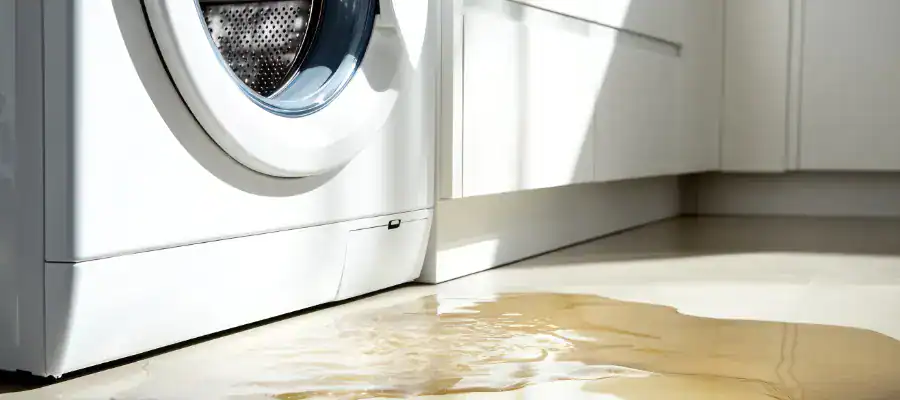
Secondary damage encompasses the damage that occurs subsequent to a washing machine drain overflow, particularly when the drain backs up when washing, causing water to extend outside of the appliance into other areas of the home. Flooding moves fast due to stubborn clogs or a malfunctioning drain system. A burst hose or unchecked leak can generate deep water in a few minutes, so the initial priority is to stop the source and analyze where water has spread.
Water damage to floors, walls, and basements
Standing water seeps through floor finishes, into subflooring and then structural joists and wall bases. Hardwood and laminate floors cup, warp, or delaminate. Tile grout can look acceptable and yet water can soak under it, resulting in paper thin glue failure down the road. In basements, water can arrive at insulation and masonry, leaving stains and weakening materials. For example, a clogged drain causes a washer to back up, leading to drain issues. Water flows into an adjacent hall and soaks the drywall for several hours, leaving the lower 30 to 60 centimeters swollen and soft. Immediate removal keeps damage shallow and contained, while a slow response allows water to wick up the walls and into other rooms.
Mold growth and structural issues
Dampness from an overflow can easily lead to mold growth within 24 to 48 hours. Porous materials, such as carpet padding, drywall, and insulation, hold moisture and become mold incubators. Mold causes secondary damage, not only ruining materials but also introducing health hazards to people living in the home. Prolonged moisture can lead to drain issues like rusting metal fasteners and decaying wood framing, resulting in expensive structural fixes. Avoid mold by drying out quickly, cutting out wet insulation and drywall, and using de-humidifying and air circulation with fans until moisture levels are deemed safe.
Damage to nearby fixtures and systems
As we saw in the introductory testimonial, recurring drain backups can impact more than just the laundry. Water has a way of pooling around a water heater and can potentially cause corrosion or electrical issues. Toilets and showers downhill from your laundry drain can experience a drain backup, leading to reverse flow or lingering wet at the base that ruins seals and grout. Check nearby fixtures after an overflow, especially for drain issues. Test the water heater for leaks, inspect toilet bases for soft flooring, and look in shower enclosures for staining or softened grout.
Restoring the laundry area after flooding
Start with power and water damage! Pump or wet-vac standing water and lift wet carpet, pads, and loose baseboards. Scrub all hard surfaces with detergent, then disinfect with a mixed bleach or EPA-registered product for household use. Replace damaged drywall by cutting at least 15 to 30 cm above the waterline, insulation, and warped flooring. Check and repair the washing machine drain hose and trap to avoid drain issues. Replace hoses showing wear or cracking to prevent a clogged drain. Minimize the chance of siphoning and backflow by keeping at least 12 mm of air gap between your drain pipe and discharge hose. Schedule regular hose and drain inspections to prevent secondary damage from happening again.
Conclusion
A backed-up washing machine drain results in soggy floors, odors, and worse pipe damage. Clean lint traps and the mesh bag for small items. Run a hot-water rinse once a month with a cup of baking soda and a cup of white vinegar to cut soap build-up. Examine the drain hose for kinks and maintain it looped above the trap. For constricted or aged pipes, have a pro inspect and snake the line. Newer washer hookups require air gaps and correct venting. Address incorrect fittings as soon as possible. Minor repairs save time and money. Test the easy water above this week and call a plumber if it still backs up.
Frequently Asked Questions
Why does my washing machine drain overflow during the spin cycle?
A clogged drain hose, blocked standpipe, or slow house drain can’t keep up with high flow, often leading to drain issues. Inspect hoses and traps for stubborn clogs and clean them to ensure proper draining.
Can a blocked pump cause my washer to overflow?
Yes. A defective or clogged drain pump cannot evacuate the water quickly, leading to drain issues. Check and clean the drain pump filter thoroughly and replace the pump if it does not work.
How do I tell if the problem is the home drain and not the washer?
Flush water through the laundry sink or standpipe at high velocity. If it backs up when washing or overflows, the main line issue is likely the cause. If only the washer overflows, the washer probably needs fixing.
Will using a longer drain hose prevent overflow?
Not quite. A longer hose can lead to drain issues, causing height and kink problems. Use a hose that is installed according to the manufacturer’s recommendations for height and smooth routing.
How can I prevent future washing machine drain backups?
Regularly clean lint traps, filters, and hoses to prevent stubborn clogs in your drain system. Schedule professional drain cleaning annually to avoid potential drain issues and ensure proper installation.
Can modern washer cycles cause more drain problems?
Yes. Myth busting on why the washing machine drain backs up when washing; upgrading plumbing or adding a larger drain line can help prevent drain issues.
What secondary damage can overflow cause and when should I call a pro?
Overflow can wreck floors, walls, and electrical systems, leading to mold and drain issues. Call a licensed plumber immediately if water is extensive, continuous, or approaches electrical outlets.
Key Takeaways
We recommend changing your evaporator pad at least once a year, prior to the heating season. Coordinate the change with…
Key Takeaways
A condensate pump is a device that pumps water from your air conditioning or refrigeration system if gravity drainage is not…