
Whole Home Humidifier Installation Service in Centennial
Key Takeaways
-
Due to Centennial’s high altitude and arid climate, the indoor air can be very dry. Keep an eye on humidity with a hygrometer and invest in a whole house humidifier to stay comfortable and healthy.
-
Whole home humidifiers support respiratory health and reduce allergies, skin symptoms, and preserve wood floors, furniture, and paint by maintaining balanced humidity.
-
Select the appropriate humidifier for your home size and HVAC system: bypass, fan-powered, or steam. Consider consulting an HVAC technician.
-
Professional installation matters for proper placement, safe wiring and plumbing, airtight duct integration and calibrated humidistat settings.
-
Regular maintenance matters: Schedule annual service, replace pads and water panels on the manufacturer’s timeline, and follow cleaning steps to prevent mold, mineral buildup, and performance loss.
-
Hire licensed local HVAC contractors experienced with Centennial’s climate. Ask for quotes and warranties. Store warranty paperwork nearby for servicing.
A whole home humidifier install Centennial refers to fitting a central humidification system into a home’s HVAC setup in Centennial, Colorado.
These installs introduce controlled moisture to interior air, enhance comfort, preserve wood and flora, and even minimize static.
As we mentioned, average systems hook into your furnace or ductwork and need a water line, drain, and random filter changes.
The body details pricing, step-by-step procedure, and maintenance advice.
Centennial’s Climate
Centennial is at a higher elevation with a naturally dry climate that defines indoor air needs around the year. Seasonal swings deliver cold, dry winters along with occasional summer heat waves, so homes are confronted with low outdoor humidity and significant indoor swings when the furnace or AC kicks on.
Centennial’s Climate – Maintaining indoor relative humidity between 30% and 50% promotes comfort, health, and the longevity of wood floors and furniture.
High Altitude
With that higher elevation comes less ambient moisture, which increases the need for humidification in homes. Thin air at altitude accelerates evaporation from skin and mucous membranes, so Centennial’s residents tend to experience dry eyes and scratchy throats faster than they would in denser, lower-lying regions.
That same thin air also removes moisture from houseplants, wood trim, and uncovered hardwood, creating spaces and crevices. Right humidity levels reduce evaporation, safeguard finishes, and make breathing easier.
A basic hygrometer positioned in a living space and bedroom provides an immediate perspective on indoor moisture; shoot for 30% to 50% to prevent both dryness and damp.
Dry Air
Dry air in Centennial homes is a fact of life, especially during the colder seasons when outside humidity is low and the furnace runs constantly. Dry nose, itchy skin, aggravated allergies and static electricity are all symptoms.
Long term exposure can warp wooden tables and cause floorboards to shrink or crack. Whole house humidifiers pass moisture evenly through your central HVAC ductwork, eliminating hot spots and room-to-room variation.
Whole-home systems reduce portable humidifier maintenance and the chances of local over-humidification that causes mold in individual rooms.
Winter Effect
In the winter, furnaces and space heaters drop the indoor relative humidity even more, causing our homes to feel colder at the same thermostat setting. Drier air generates more static shocks that can stress electronics and cause nuisance discharges.
A whole house humidifier attached to the furnace maintains humidity during the winter months which makes you feel warmer and less dry and can save heating dollars by allowing you to turn down your thermostat while maintaining comfort.
Routine maintenance — filter changes, water panel replacement and seasonal check-ups — keeps the unit efficient and avoids mineral buildup that diminishes system performance.
Centennial’s Climate – Centennial residents should schedule an early winter check to keep the humidifier humming through heating season.
Humidifier Benefits
Whole-home humidifiers alter the indoor environment by maintaining relative humidity within a desired range, generally 30% to 50%. That regulated humidity range optimizes air quality, minimizes airborne irritants, and defends people and property. The systems integrate with central HVAC or function as stand-alones, such as steam humidifiers, which inject moisture rapidly and can operate outside of the furnace heat cycle.
1. Health
30%–50% humidity helps you breathe easier and eliminates triggers for asthma and other respiratory conditions. Dry air dehydrates mucous membranes, leaving sinuses and airways susceptible to irritation and infection. Maintaining humidity in the suggested range mitigates that risk.
Humidified air lessens common winter ailments: dry skin, chapped lips, scratchy throats, and nosebleeds often called the “Colorado crud” at high altitude. By weighting particles, the excess moisture assists dust and many allergens to settle out of the breathing zone, so people breathe fewer irritants. Whole-house units treat all rooms and are less prone to generating dry air pockets than single-room units, which makes them a useful companion for continued indoor air quality enhancement.
2. Comfort
Maintaining a consistent level of humidity helps rooms feel warmer and reduces dry-air symptoms like sore throats and chapped lips. When air contains sufficient moisture, skin remains more supple and static shocks are less common.
Whole-home humidifiers send even moisture that makes bedrooms, living areas, and beyond stay comfortable — day or night. Pairing a humidifier with a smart thermostat allows precise control. You can set a humidity schedule, avoid over-humidifying, and monitor levels remotely. That pair easily provides the comfort experience you expect all year round, with no more manual topping up of portable units.
3. Home Preservation
Low humidity ‘sucks’ the moisture out of wood and can crack, warp, or shrink floors, furniture, and instruments. Balanced indoor moisture guards painted walls, wallpaper seams, and other finish materials against premature aging.
Whole-home systems minimize the fluctuations that cause structural stress and help avoid window condensation cycles that encourage mildew. Routine maintenance, including cleaning, replacing pads or cartridges, and checking systems yearly, keeps the humidifier working as designed and helps protect home investments in the long run.
4. Energy Efficiency
Good humidity makes interiors feel warmer, so tenants frequently turn down their thermostats and remain cozy. That effect can save on heating bills, particularly in dry or high-altitude climates where low moisture is constant.
Steam humidifiers add moisture efficiently and rapidly and can be installed free-standing, so if you don’t have integrated humidification in your system, this is a good option. Opt for energy-efficient models and set points to prevent overuse. Judicious moisture additions bring consistent comfort and savings over time.
Humidifier Types
Whole-home humidifiers come in three main styles: bypass, fan-powered, and steam. They all employ a slightly different technique of introducing moisture to house air and fit different types of HVAC configurations, home sizes, and budget constraints. Humidifier type varies in performance, energy consumption, noise, and maintenance.
When selected appropriately, a humidifier maintains indoor relative humidity at 30% to 50%, the zone associated with comfort and decreased incidence of respiratory and structural problems.
Bypass
Bypass humidifiers are inexpensive units that utilize furnace air flow to push air through a wet pad. They tie into your existing ductwork and depend on your furnace or air handler running to blow heated air over a water panel, which evaporates moisture into the supply stream.
They are the most affordable whole-home choice, compact enough for basement or closet furnaces, and typically quieter than fan-powered models. However, they have trouble humidifying larger homes and cannot run when the furnace is off, so homes with intermittent heat cycles may experience broad humidity swings.
Regular cleaning is important. Mineral deposits and mold can form on the pad and inside the unit if not flushed and replaced seasonally.
Fan-Powered
Fan-powered or power humidifiers have a fan inside that draws air through a wet panel and blows humidified air into the ducts. They aren’t tied to the furnace cycle, so they can run when heat is off and provide more consistent humidity.
They have significantly greater capacity than bypass models, making them more suitable for larger homes or situations requiring more precise control. Power units can modulate the blower, be installed on a wall rather than on the furnace, and offer quicker response to setpoint adjustments.
Downsides are they are more expensive, noisier, and often require a dedicated high-voltage (220 V) circuit. Expert installation is ideal to weave the electrical and duct connections safely together.
Steam
A steam humidifier produces sterile steam and either a fan or the HVAC system circulates it. They provide targeted humidity management and fast humidification, ideal for big houses or commercial HVAC customers requiring fast, even moisture injection.
Steam models don’t rely on furnace airflow and can put out massive amounts of moisture on demand. It requires electrical planning and professional HVAC service for installation given higher power needs and the need to handle scale and condensate.
They require regular maintenance to avoid scale buildup on heating elements and to operate safely and efficiently. Neglect can diminish output and increase hazards.
|
Type |
Pros |
Cons |
|---|---|---|
|
Bypass |
Low cost, quiet, fits small furnaces |
Needs furnace on, low capacity for large homes |
|
Fan-powered |
Higher capacity, runs independently, faster |
Higher cost, louder, may need 220 V |
|
Steam |
Precise, rapid, high output |
Expensive, electrical needs, scale requires maintenance |
Installation Process
Your whole-home humidifier install is a series of organized steps from evaluation to testing. They make sure the unit fits the home’s HVAC system, the duct layout, and the water and electrical requirements before they do a final validation.
Assessment
HVAC experts evaluate current system compatibility and ductwork. They measure existing humidity with a hygrometer and map rooms to find areas with the driest air.
Checklists include furnace model, duct material, presence of a straight trunk run of at least 1.8 meters, water supply access, and space for service access. Note if ducts are complex or congested. Those homes usually need extra labor or parts and the cost can rise.
Technicians verify local plumbing and electrical codes and compare humidifier specs for maximum coverage and water consumption against household needs. A thorough home consultation settles whether an evaporative, bypass, or steam humidifier fits best.
Placement
Select a location near your furnace or air handler where it can distribute evenly. The location has to enable a water line and drain or condensate run without long bends.
Don’t site the unit next to heat sources or supply vents that will bias measurements. If the trunk run is short or blocked, move around in the attic, basement or utility room until you find an unobstructed 1.8 m run.
HVAC specialists can draw alternatives based on the house floor plan and mark where panels, wiring and valves need to be accessible for maintenance down the road.
Integration
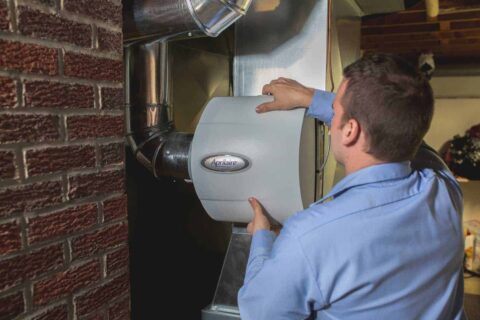
Integration spans hardware and control interfaces. Installers cut into ductwork and install the humidifier such that air flow passes through the unit.
Airtight seals are essential to avoid leaks. Plumb in to water lines with shutoffs and proper drains using materials that comply with local plumbing codes.
Wire the humidistat and any control board to the furnace as per the manufacturer’s diagrams and local electrical codes. Smoke or pressure test all duct connections for leaks and seal with foil tape or mastic.
Place the humidistat somewhere convenient to adjust, at breathing level.
Testing
Testing validates safe, correct functioning. Operate the unit to test for leaks, proper water flow, and solid electrical connections.
Track humidity increase in several rooms. The system ought to achieve and maintain the set point without unnecessary cycling.
Calibrate the humidistat if readings differ from a reference hygrometer. Record test results, demonstrate to the homeowner simple operation and maintenance, and leave an operating manual.
Stress observation for the initial weeks and plan for cleanings and filter swaps to avoid breakdowns and prolong longevity.
Professional Selection
Select your professional for a whole home humidifier install in Centennial by knowing the critical characteristics that influence performance, safety, and long-term cost. Expert HVAC contractors provide expertise with local weather, plumbing, and electrical work and the building codes governing installation. They take home size and ductwork configuration into account and suggest bypass, steam, or media pad systems based on those realities and on whether a straight trunk run of at least 1.8 meters is possible for ideal airflow and diffusion.
Local Expertise
Local HVAC firms understand Centennial’s dry air and how low outside humidity affects indoor comfort and energy efficiency. They’re able to indicate system selections that shine here, like suggesting a steam humidifier for expansive homes with complicated ductwork or a bypass unit where the furnace design lends itself to a long trunk run.
Local pros know soil mineral content and water hardness, which impacts scale build up in steam units and service schedules for media pads. Adjacent companies typically provide quicker issue response. That assists with seasonal startup, emergency leaks, or control malfunctions.
A demonstrated local history of whole home installs is a powerful indicator. Request some examples of previous work and reachable references. Look at customer reviews and recent feedback to verify quality and timeliness before making a decision.
Licensing
Check contractor licensing and insurance prior to any work. A licensed installer adheres to safety codes and industry standards and has liability and workers’ compensation insurance. Ask for certificates that allow for doing electric and plumbing work.
Appropriate licenses minimize liability when pulling power to steam units or slicing into ductwork to squeeze in a 1.8 m trunk run. Licensing signifies continuing education. Certified technicians are more likely to be familiar with manufacture install specs and warranty terms.
Save copies of all qualification documents with the project file.
Warranties
-
Manufacturer warranty: coverage for parts and defects, typical term, and exclusions
-
Installer warranty: labor and workmanship timeframe, response procedures
-
Consumables coverage includes filters, pads, specific components, and replacement intervals.
-
Extended plans are optional service contracts or add-ons for annual maintenance.
Warranties cover faulty components and poor installs. They’re important when you get things repaired or replaced down the line. Professional selection. Verify what actions void coverage.
Faulty repairs, unlicensed work, or non‑authorized parts can all annul protection. Some maintenance, filter swaps, and cleaning keep the unit in warranty and working within the optimal 30 to 50 percent humidity range.
Post-Installation Care
Post-installation care is necessary for any newly installed whole home humidifier to keep it humming and to preserve the HVAC system and indoor air quality. Keep a close eye on the unit during those first few weeks post-installation to verify airflow, water flow, and humidistat response. Schedule monthly checks and annual service on your calendar. Most warranties require a filter swap or written inspection.
Annual Service
Make a checklist of service dates, what was done and any notes on condition. With fields for technician name, parts replaced, and humidity set points. Common maintenance tasks include cleaning the humidifier housing, inspecting and tightening water connections, checking for leaks, calibrating the humidistat, and testing electrical connections.
Yearly service spots little faults such as loose fittings, worn valves, and mineral build-up before they generate malfunctions or low output. Preventative checks lower expensive repairs and increase unit life by years. Plan a recurring maintenance schedule with an initial check at installation, a follow-up after the first month, and then yearly inspections. Log each visit and the actions taken.
Pad Replacement
-
Shut down the furnace and turn off the water to the humidifier.
-
Remove the access panel and slide out the old media pad.
-
Check for scale or debris in the pad frame and housing. Wipe down if necessary.
-
Install the new, manufacturer-approved media pad and align it as instructed.
-
Reconnect water, restore power, run a test wash, and check for leaks.
Filthy or clogged pads reduce efficiency and may contain mold or bacteria. Replace them when visibly soiled or according to manufacturer time intervals. Use only approved replacement pads to match flow rates and material specs. Aftermarket parts may change performance. If you’re uncertain, have a pro service visit to exchange pads and check system calibration.
Water Panel
|
Inspection Interval |
Action |
|---|---|
|
Weekly (first month) |
Rinse tank and check for visible buildup |
|
Monthly |
Inspect water panel for scale and replace if needed |
|
Annually |
Full inspection and replacement if showing wear |
Mineral deposits on water panels limit airflow and reduce humidifier output. Check the water panel with each annual service and monthly checks when water is hard. Replace with quality parts to maintain flow and evaporation rates.
Rinse the tank every week and give it a deeper clean once a week if local water makes it prone to quick scaling. Change your settings with the seasons to keep indoor humidity levels between 30 percent and 50 percent and adhere to manufacturer care instructions to preserve your warranty.
Conclusion
Measurable benefits of a whole home humidifier in Centennial homes include its ability to slice through dry air that cracks your wood floors, dries your skin, and raises your heating bill. A bypass unit is a nice fit in many homes and integrates with your furnace. A steam model provides rapid, accurate humidity for big areas. Professional installation saves time and restricts leaks. With regular filter and pad inspections, you will keep your system running and reduce repair expenses.
Easy plan assists. Select the style tailored for home size and HVAC, schedule a certified tech, and establish a weekly inspection regimen. Little steps can have a big impact on comfort and your health. Eager to make it happen! Get a local estimate and compare two installer quotes.
Frequently Asked Questions
What is a whole-home humidifier and how does it work?
A whole-home humidifier attaches to your HVAC system and injects moisture into the air blowing around ducts. It leverages a water source and evaporative or steam techniques to increase the humidity evenly throughout the home.
Why install a whole-home humidifier in Centennial?
Centennial’s dry winter air tends to pull the humidity out of the air inside. A whole-home humidifier helps combat static, dry skin, and damaged wood. It adds comfort and protects your home and health year-round.
Which humidifier type is best for my Centennial home?
Evaporative and steam humidifiers are typical. Evaporative versions are inexpensive and dependable. Steam units offer accurate control and greater output for larger homes. Choose based on home size and budget.
How long does a professional installation take?
The majority of pro installs require two to six hours. Time depends on system type, existing HVAC access, and any plumbing or electrical work required. Techs will test the system before they leave.
What should I look for when hiring an installer?
Select licensed HVAC professionals with local experience, transparent pricing, and great reviews. Inquire about warranties, maintenance plans, and humidistat placement. Check insurance and references for confidence.
How do I maintain a whole-home humidifier?
Swap pads/filters according to manufacturer schedules, drain and clean water lines once a year, and get your HVAC system inspected annually. Maintenance keeps mineral deposits at bay and performance high.
Will a humidifier affect my energy bills?
Correctly sized humidifiers are very energy efficient. Steam models consume more electricity. Proper humidity control helps us feel warmer, which means we keep the heat a little lower.
Key Takeaways
Ductless mini splits in Parker, CO are even more efficient than traditional HVAC in Parker’s high-altitude, dry climate,…
Key Takeaways
Englewood basements — There are moisture issues here from seasonal high humidity, local soil types, and poor drainage. Focus…