
Plumbing Insurance: What Homeowners and Plumbers Should Know
Plumbing insurance is the set of policies that protect homeowners and plumbing professionals from the cost of water damage, on-the-job injuries, and faulty workmanship. For a homeowner, standard coverage usually pays for sudden, accidental damage – like a pipe that bursts – but not slow leaks or neglected maintenance. For a plumber, it means general liability, workers’ compensation, and bonding that make the contractor safe to hire.
Coverage details vary by policy, insurer, and situation, so treat the notes below as general guidance for the Colorado Front Range rather than a substitute for reading your own policy or speaking with your agent. 1st Choice Pro Services is a licensed, bonded, and insured plumbing and HVAC contractor in Parker, and we see how these insurance questions play out on real jobs across the south Denver metro every week.
Does Homeowners Insurance Cover Plumbing Damage?
The short answer is: sometimes. Most standard homeowners policies in Colorado draw a sharp line between damage that is sudden and accidental and damage that is gradual or the result of poor maintenance. Understanding that line is the difference between a covered claim and a denied one.

Sudden and Accidental Damage
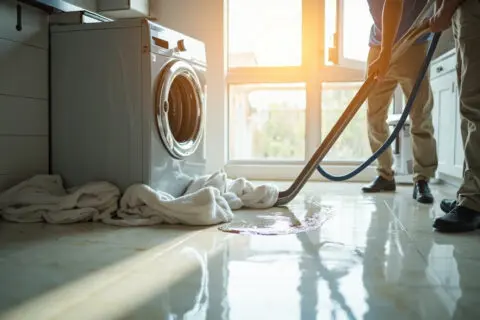
When a supply line fails without warning and floods a bathroom, or a washing machine hose ruptures, most policies cover the resulting water damage to floors, drywall, and belongings. This is the category most claims fall under. One important detail catches many homeowners off guard: insurance typically pays to repair the damage the water caused, not the failed pipe or fixture itself. The cost of the actual plumbing repair usually comes out of your pocket.
Gradual Leaks and Wear
Damage that develops slowly is a different story. A drip behind a wall that rots a stud over months, corrosion that eats through old galvanized pipe, or a fixture that was never maintained is generally treated as wear and tear – and wear and tear is excluded from nearly every standard policy. This is why catching small leaks early matters so much. Once an insurer decides the problem was gradual, the claim is usually denied, no matter how expensive the repair turns out to be.
What About Frozen Pipes?
On the Front Range, this is the big winter question. When temperatures drop into the single digits and a pipe freezes, expands, and splits, the resulting burst is usually considered sudden and accidental – and often covered. But insurers expect you to take reasonable steps to prevent it. If you left a vacation home unheated in January, or shut off the furnace while traveling, an adjuster may argue the loss was preventable and reduce or deny the claim. Keeping the thermostat set no lower than about 55°F, insulating pipes in crawl spaces and along exterior walls, and disconnecting garden hoses before the first hard freeze all help protect both your home and your claim.
Why Hiring a Licensed, Bonded, and Insured Plumber Matters
Those three words – licensed, bonded, and insured – are not marketing filler. Each one shifts a specific risk off of you as the homeowner.
Licensed means the plumber has met Colorado’s competency and code requirements. Insured means that if a technician is hurt in your home or a repair damages your property, the contractor’s coverage pays – not your homeowners policy. Bonded means a surety bond stands behind the work if the contractor fails to finish the job or meet its obligations. Hiring an unlicensed handyman to save a few dollars can backfire badly: if their mistake floods your basement, you may have no one to bill, and your own insurer may deny the claim because a licensed professional did not do the work.
Before any plumber starts, it is reasonable to ask for proof of insurance and a license number. A legitimate contractor will provide both without hesitation.
Types of Insurance a Professional Plumbing Contractor Carries
A properly protected plumbing and HVAC company carries several layers of coverage so that a single accident never lands on the customer:
- General liability insurance covers bodily injury and property damage caused during the work – for example, if a repair leads to water damage in your home.
- Workers’ compensation insurance covers medical bills and lost wages if a technician is injured on your property, which keeps you from being pulled into an injury claim.
- Commercial auto insurance covers the company’s trucks and drivers on the way to and from the job site.
- Surety and license bonds provide financial recourse if contracted work is left unfinished or fails to meet code.
These are the same protections a contractor should verify when bidding larger jobs, and the same ones that make a company trustworthy for a simple water heater swap.
Colorado Conditions That Affect Plumbing Claims
The south Denver metro puts specific stress on home plumbing, and those stresses shape what insurers end up seeing.
Freeze-thaw cycles. Parker, Castle Rock, and Highlands Ranch swing through hard freezes and sunny afternoons all winter long. Water in an under-insulated pipe can freeze overnight and burst, then thaw and flood during the day. A sudden burst is often covered; the slow seepage from a hairline crack that follows may not be.
Hard water. Denver-area water is hard, and years of mineral scale narrow pipes and corrode water heaters and fixtures from the inside. Because this damage builds gradually, it almost always falls under the wear-and-tear exclusion. A water softener and routine water heater maintenance protect both your plumbing and your ability to file a valid claim later.
Frequently Asked Questions
Does homeowners insurance cover a burst pipe?
Usually yes, when the burst is sudden and accidental. Most policies cover the water damage to your home and belongings, though the repair to the pipe itself is typically your responsibility.
Does insurance cover a slow or gradual leak?
Generally no. Slow leaks, corrosion, and damage from deferred maintenance are treated as wear and tear, which standard policies exclude. Fixing small leaks quickly is the best protection.
Should I ask my plumber for proof of insurance?
Yes. Ask for a certificate of insurance and a Colorado license number before work begins. A licensed, bonded, and insured contractor will share both readily.
Does homeowners insurance cover water heater replacement?
Rarely for age or normal failure – that is considered a maintenance item. Coverage is more likely if the water heater is damaged by a covered event, such as a sudden burst that floods the surrounding area.
Whether you are trying to prevent a winter pipe burst, cleaning up after one, or simply want work done by a team that stands behind it, 1st Choice Pro Services can help. We are a licensed, bonded, and insured plumbing and HVAC contractor serving Parker, Castle Rock, Castle Pines, Centennial, and Highlands Ranch. Call us at 303-841-1448 to schedule service or ask a question about your plumbing – and hire with the confidence that the job is fully covered.
Key Takeaways
Understand typical issues such as drain clogs, incorrect installation, and pump or hose malfunctions to target fixes where…
Key Takeaways
We recommend changing your evaporator pad at least once a year, prior to the heating season. Coordinate the change with…