
Sewer Line Spot Repair vs Full Replacement: Which Is Right for Your Home?
Key Takeaways
-
Identify obvious red flags like consistent slow drains, sewage smells, swampy patches in the yard, or multiple fixtures backing up and let those guide when you should investigate and act.
-
Leverage camera inspection and hydrostatic testing to accurately locate damage and determine severity. Then, record results to inform spot repair or replacement.
-
Pick spot repair for localized issues such as a single crack or root intrusion in an otherwise healthy pipe, and opt for full replacement when damage is extensive, the pipe is approaching end of life, or there are multiple failures.
-
Consider total cost, restoration requirements and landscaping disruption by contrasting excavation versus trenchless alternatives. Factor in permitting, hardscape repairs and long-term maintenance projections.
-
If your goal is to minimize surface impact and maximize lifespan, be sure to explore modern trenchless techniques and high-strength compounds. It’s still possible for damage to accumulate at repair joints or old-to-new coupling points.
-
Be proactive. Schedule professional diagnostics, check local code and warranty requirements, and plan for inspections and routine maintenance to avoid repeat sewer failure.
Sewer line spot repair vs full replacement describes a pair of popular methods to repair damaged sewer lines. Spot repair fixes only a short damaged section, with minimal digging and lower cost. Full replacement removes and replaces the entire pipe when damage is extensive or pipes are aged. The decision is based on pipe age, damage extent, soil, and long-term cost. The key section compares costs, disruption, life span, and when each option fits.
Warning Signs
Catch sewer line distress early to determine if you need a spot repair or complete replacement. Search for trends, not isolated incidents. Take into account the pipe’s age and material, frequency of service, and where symptoms manifest to estimate scope and urgency.
Drainage Failure
Constant slow drains in multiple fixtures simultaneously, such as the kitchen sink, tubs, showers, and laundry, generally indicate a main sewer lateral issue and not a simple trap clog. Toilets that gurgle when another fixture is used, or when you run water elsewhere, are a classic warning sign of sewer-line blockage or trouble flow. Water that enters a lower fixture, like a basement floor drain or first-floor tub, after a higher fixture drains indicates a more serious blockage or collapse further down.
If snaking clears it temporarily but it returns soon, that repeat activity indicates a pipe is failing or collapsing instead of just clogged by debris. Keep a record of how frequently you require pro main-line cleaning. More than once every year or two might indicate structural failure is afoot. Remember that most sewer problems manifest themselves within 10 to 20 years of installation depending on material and conditions.
Soil Settlement
Depressions, sinkholes, or new low spots in the yard can indicate soil loss due to leaking sewer pipes. Uneven settling of sidewalks or hardscape above the pipe route is another warning sign. Driveway, patio, or foundation cracks that track with the sewer path are cause for concern. These signs frequently result from erosion due to continual leaks. Roots can exacerbate the erosion by infiltrating into cracks.
Older materials such as clay and Orangeburg are more likely to leak and have joint failure. Expansive clay soils are known to shift, further hastening pipe breakage. If you notice a pattern of lawn depressions or localized rich, moist green grass where water pools, plot these points in relation to the sewer line location prior to a technician visit.
Odor Emission
Stubborn sewage smells in the house around floor drains, sinks, or the main vent may be a sign of a deteriorating sewer lateral or fractured joint. Heavy sewage smells in the yard, particularly after rains or heavy watering, can indicate that the underground pipes are leaking. If the odor intensifies after storms or when machines operate, this indicates leaks or root intrusion forming intermittent flow paths.
Unexpected bursts of smell typically indicate a failed joint or a displaced segment. Because odors can travel through soil, check multiple points: vents, cleanouts, and yard areas along the line. Recurring odors mean looking past where the symptoms first appear. One repaired monster can’t keep the water out if they’re breathing elsewhere.
Diagnostic Methods
Diagnostic work determines what’s wrong, where and how extensive before selecting spot repair or complete replacement. It ultimately connects visible defects to symptoms of slow drains, gurgling toilets, and low fixture backups, then projects cost, disruption, and probable longevity of any repair. Your main instruments are camera inspection and hydrostatic testing, which should be used in concert when feasible. Both types of output should be recorded with video, stills, and written notes for later perusal or second opinions.
Camera Inspection
Camera inspection inserts a flexible scope through cleanouts and runs the full length of the lateral from house to public main. Real-time video exposes cracks, corrosion, rust buildup, root intrusion, bellies, offset joints and defects of all kinds. Operators mark distance markers so that each flaw can be located to a few centimeters, enabling crews to schedule a surgical spot repair instead of blind digging. Video allows you to show insurance adjusters or permitting officials the reality, and most reports come with a copy of the film and a written narrative. Older pipes can develop corrosion or several tiny cracks. Cameras assist in determining whether those issues are isolated or widespread. Camera work usually falls in the low to mid four figures for small jobs, though length and access complexity increases costs. Camera inspection is non-destructive, fast, and readily available in the majority of urban areas.
Hydrostatic Testing
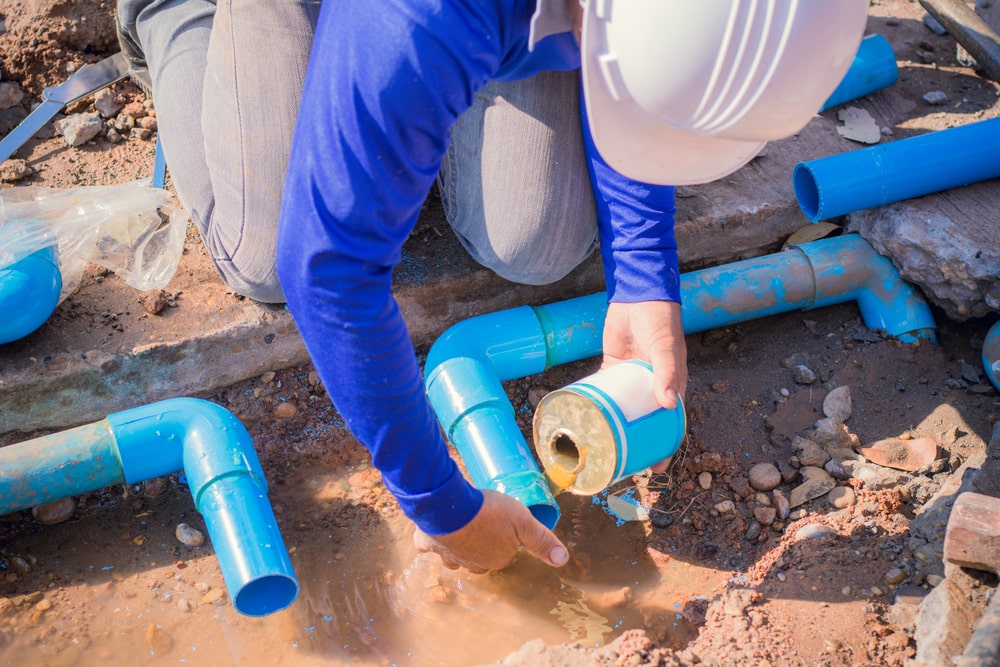
Hydrostatic testing isolates and seals the pipe segment and fills it with water to monitor for any leaks or pressure loss over time. A consistent pressure decline indicates weakened strength, concealed fractures, or joint leaks that might not present visibly via camera alone. Hydro tests can help verify if a targeted defect identified on video is the sole breach or indicative of systemic failure and subsequently the spot repair versus full replacement decision. It’s good for finding the wee leaks under slabs or in backfill where shifting soil covers them up. Pairing hydrostatic output with camera footage provides a much more precise map of where and how deep the damage is. Tests involve temporary seals and water management, so logistics must be considered. Prices depend on length tested and site accessibility.
Recording the results with video, photos, and notes is vital. Through photographs and video, a record is available for second opinion, and traditional open excavation diagnostics can be compared against trenchless evaluation, which typically generates sufficient information to select a trenchless rehabilitation and bypass full replacement.
Decision Criteria
Begin with a brief explanation of the factors that guide whether to pursue a spot repair or a full sewer line replacement. The decision depends on the scope of damage, pipe age and material, cost and disruption, site conditions, and local code requirements. Below are focused subtopics to evaluate each factor in practical terms.
1. Damage Extent
Determine whether the damage is localized, such as one cracked section or a solitary root intrusion, or widespread with multiple leaks, joint failures, or sewer bellying. Employ CCTV camera footage to map damaged stretches and their extent. Repairs are usually viable for areas approximately 3 to 15 metres in length, whereas recurring breakdowns across non-contiguous areas indicate replacement. Multiple leaks, tree root intrusions, and main breaks are indications that full replacement is probably going to be the safer choice. Consider future risk: a single repaired spot on a mostly intact pipe may hold for years, but patching several weak joints usually delays the inevitable and raises total costs later.
2. Pipe Longevity
Maybe it’s a matter of judging a patch’s anticipated residual lifetime against that of a fresh stretch of pipe. The older materials—clay, cast iron, or Orangeburg—age faster and tend to have systemic weaknesses, so replacing such mains generally delivers superior long-term value. New PVC or HDPE can outlast them both and may be a good companion to spot repairs if the majority of the length is solid. Factor in the pipe’s age: if the main is near the end of its service life, full replacement avoids recurring issues and frequent service calls. When compromises on partial fixes are made on old systems, anticipate increased return trips and additional follow-up costs.
3. Total Cost
Calculate all costs: per-linear-metre charges for excavation or trenchless lining, labour, permits, and surface restoration. Factor in equipment rental and any traffic-control or public-rights-of-way fees. For instance, trenchless lining can be more expensive upfront yet save on landscaping restoration. Compare repeated small repair costs to one-time replacement expense. Repeated repairs can add up to more than replacement within a few years. Factors like soil type, pipe depth, and access constraints impact price and time, too. Sometimes, trenchless options are better even if per unit costs are higher.
4. Landscape Disruption
Determine the footprint of open excavation compared to trenchless work. Digging trenches can destroy lawns, driveways, mature tree roots and irrigation lines. If replacing under hardscape or near large roots, restoration becomes more intensive and expensive. Trenchless methods minimize surface disruption but often still require pits and tunneling machines. Consider time and expense to repair hardscape and investigate easements or city regulations regarding work in parkways.
5. Code Compliance
Verify that selected methods comply with local plumbing codes, accepted materials and permit requirements. Make sure liners, PVC or HDPE meet standards in your area and restoration of public areas adheres to local regulations. Check that warranties and insurance cover your chosen approach, and sign off on approvals before work starts to prevent rework or fines.
Method Comparison
Spot repairs are for localized damage, while full replacement removes and replaces the entire length. This section compares durability, timeline, and maintenance, then breaks down trenchless lining, pipe bursting, and open-trench excavation. Read this to see which method fits pipe size, soil, and site limitations.
Durability
Spot repairs with new Schedule 40 PVC or short HDPE runs can last over 50 years where the damaged section is relatively small, usually under 3 meters, and the surrounding pipe is structurally intact. CIPP liners offer a structural sleeve but tend to have briefer service lives for local patches. In the field, small liner repairs may last 5 to 10 years when inserted into an otherwise degraded run. Full replacement removes rotted material completely, so the risk of long-term failure decreases since all of those original seams, fissures, and rust spots have been eliminated. Lined systems and new HDPE resist root intrusion and some soil movement. HDPE resists roots by lacking joints, and CIPP creates a smooth interior surface that discourages root growth. Vulnerable areas persist where new work is joined to old. Transition joints and repair collars can develop into stress points or sources of root intrusion over time. That junction hazard is smaller when replacement is ongoing for the entire run.
Timeline
Spot repairs and pipe lining are generally fast. Small spot repairs generally complete within 1 to 2 days, and trenchless lining of a short section is comparable. Complete replacement typically requires anywhere from a few days to a week or more depending on length, access, and surface restoration needs. Permit review, municipal inspection, and landscaping or paving restoration add days to weeks for either method. If sewer service needs to be interrupted, consider temporary holding or alternative routing. Spot repairs can be completed with shorter outages, while full replacement requires planned disconnection and longer windows of service interruption more frequently.
Maintenance
Lines that get spot-repaired require watchful follow-up. Routine camera inspections are recommended, and more frequent drain cleanings assist before small problems become big. Partially rehabbed systems are still at risk where old pipe exists. Residual root intrusion or displaced joints can cause failure again. New full-bore pipes or properly fermented liners minimize service calls and require less frequent cleaning. Pipe lining does decrease maintenance in the short run, but since the interior diameter diminishes, roughly 6 mm for standard residential pipes, flow capacity drops a bit and blockages can accumulate. Select according to the extent of damage, pipe location in proximity to buildings or landscaping, pipe diameter and length, and soil conditions. Trenchless works well for tight surface constraints. Pipe bursting is great for replacing pipe without open digging. Excavation is the most certain fix when many sections are damaged.
Modern Technologies
Modern trenchless techniques allow homeowners to repair sewer lines with much less digging than a complete replacement. They prioritize identifying where the pipe is actually damaged with a video camera and then fixing or relining the pipe from the inside. That mix decreases time on site, minimizes cleanup, and minimizes the risk of damage to landscaping or building finishes.
Video camera inspection is a baseline diagnostic tool. A camera sent down the pipe reveals cracked walls, intruding roots, sagging sections, and complete blockages. It verifies the symptoms homeowners or managers describe and directs the decision to pursue spot repair, lining, or pipe replacement. Camera reports can include video, stills, and measurements that assist in estimating material needs and predicting the longevity of a repair.
CIPP liner is a very popular trenchless fixer-upper. It involves pulling or turning a resin-saturated fabric liner into the damaged area and curing it in place, creating a new pipe inside the old pipe. Today’s CIPP liners are manufactured and installed to offer over 50 years of service life when done correctly. UV light curing is becoming increasingly common due to its ability to reduce cure time and enable installers to have more control over the process. CIPP has trade-offs; it leaves the old host pipe in place and reduces the interior diameter by roughly 6 millimeters, which can matter in small-diameter systems.
Pipe bursting swaps out the old pipe for a new one in its place. A bursting head pulverizes the old pipe as it simultaneously draws in a new HDPE pipe. This technique is effective in situations where the line route can be reached at terminal points and when soil conditions permit fracturing the old pipe. Pipe bursting lays a new pipe rather than a liner, and HDPE provides flexibility, chemical resistance, and longevity.
Epoxy coatings and slip lining offer other middle-of-the-road choices. Epoxy sprayed or spun inside a pipe can seal cracks and smooth surfaces with little effect extending into walls or floors overhead. Slip lining inserts a sort of mini pipe into the existing one and grouts the annulus. They both sidestep full-yard excavation and are handy when the host pipe is ‘good enough’ to stay.
Hydro jetting augments inspection and repair by eliminating hard deposits and roots before lining or replacement. New generation high-pressure jetting units remove scale and biofilm swiftly, which enhances liner adhesion and minimizes the chances of imminent re-blockage. Combined, these technologies can reduce total project costs by 30 to 50 percent versus traditional excavation, while accelerating restoration and reducing surface disruption.
Strategic Recommendation
Opt for a route that aligns with the extent of destruction, pipe vintage, and vision. Begin with a camera inspection and report. Video allows you to observe cracks, root intrusions, shifts, bellies, and material breakdown. Take inspection results into consideration when faced with repair or replacement. If the pipe reveals sporadic problems in an otherwise good run and it’s fairly new material, spot repair generally provides the optimal cost-to-result ratio. For instance, a brief root incursion or a crack can be repaired with a localized replacement sleeve or epoxy patch over 0.5 to 1 meter long without excavating long sections.
Spot repair is appropriate when the damage is localized and access is convenient. It’s economical for smaller segments and can bring flow back fast. Trenchless local patching or sectional CIPP liners do the job nicely here. A homeowner with a 10 to 15-year-old PVC main that develops a few soft spots will frequently be better off with spot repair than replacement. Ongoing spot repairs to an aged system add up. Aging sewers with chronic problems keep giving because other unseen stretches are near collapse as well. If inspections reveal more than a few weak spots, persistent blockages, or pervasive corrosion, prepare to replace.
Suggest complete replacement when there is abundant damage, cutting-edge material failure, or aged pipe varieties. Clay, cast iron, and Orangeburg are much more susceptible to systemic failure. If over 30 to 40 percent of the line is defective or pipe age and material suggest little remaining life, replacement guarantees long-term integrity. Full replacement prevents multiple service calls and unexpected expenses and is usually the smarter option for homes older than roughly 40 years experiencing multiple issues.
Trenchless ought to be the first choice in repair and replacement situations. CIPP lining, epoxy coating, and UV-cured rehabilitation offer long-lasting repairs with little to no surface upheaval. They typically cost 30 to 50 percent less than open trench work when you consider the restoration of landscaping, paving, and time. Leverage trenchless for long runs or where surface impact needs to be minimized. For spot fixes, sectional CIPP or CIPP sleeves come in handy.
Make your decision with frugality and long-term danger in mind. Integrate camera information, material evaluation, and life-cycle cost projections. In the case of older homes, arrange for regular inspections so you can catch small faults before they result in emergency replacement. If you’re not sure, go with a detailed inspection and a written plan to calculate short-term repair costs compared to longer-term replacement savings.
Conclusion
Spot repair keeps cost low and fixes small breaks fast. Full replacement costs more, but it eliminates the big trouble and risky old pipe. Opt for spot repair for individual fractures, minor root invasions, or when pipe age and composition appear solid. Opt for full replacement for numerous breaks, collapsed pipe, or pipes older than roughly 50 years. Perform a camera scan and water test to determine the extent of the damage. Consider long-term cost, property use, and local regulations. For most homes, a tight spot repair just buys time and saves money. For tired systems, replacement halts repeat work and reduces future surprises. Get a transparent report, photo log, and written cost plan from a certified plumber before you make your decision.
Frequently Asked Questions
What is the main difference between a spot repair and a full sewer line replacement?
Spot repair repairs one damaged pipe section. Full replacement clears away and replaces it with a new continuous line. Spot repair is the least invasive option. Replacement is for widespread or recurring problems.
How do I know if spot repair will hold long-term?
Spot repair fits localized damage with healthy adjacent pipe. Sewer camera inspection and soil and pipe age considerations predict longevity. Don’t expect warranties as long as full replacements.
When should I choose full replacement over spot repair?
Go with replacement for multiple breaks, collapsed pipe, widespread corrosion, and root intrusion in long runs or old clay or terracotta lines. Replacement saves you from continuous repairs and reduces long-term expenses.
What diagnostic methods confirm the right approach?
Utilize CCTV camera inspection, smoke testing, hydrostatic testing, and localized digging. These techniques pinpoint the location, scope, and source of harm for a knowledgeable choice.
How much disruption should I expect from each option?
Spot repair typically involves little excavations or trenchless fixes with minimal landscaping disturbance. Full replacement is more disruptive and requires longer trenches and property restoration. Trenchless replacement minimizes surface disruption.
Are trenchless options reliable compared to traditional replacement?
Yes. CIPP and pipe bursting offer exceptionally durable, typically longer-lasting outcomes. The right inspection, seasoned contractors, and material warranties make it reliable.
How do costs compare between spot repair and full replacement?
Spot repairs cost less initially. Complete replacement is a bigger upfront expense, but it can be more cost effective if issues are rampant or persistent. Ask for itemized quotes and lifecycle cost comparisons.

Key Takeaways
Most furnaces in Colorado last about 15 to 20 years with proper care, but expect aging signs after 10 to 15 years. Consider…
Key Takeaways
This is the main drain cleanout—a capped pipe that allows direct access to the main sewer line and is crucial for clearing…