
Hydrofluoroolefins: A Guide to Alternative AC Refrigerants
Hydrofluoroolefins (HFOs) are a class of low-global-warming refrigerants that are replacing older HFCs like R-410A in residential air conditioners and heat pumps. HFOs such as R-1234yf, together with HFO-based blends like R-454B and R-32, deliver cooling performance comparable to the refrigerants they replace while carrying a small fraction of the climate impact. As of January 2025, most new AC systems ship with these next-generation refrigerants.
For homeowners across Parker and the south Denver metro, the practical point is straightforward: the refrigerant inside a new air conditioner or heat pump is changing, and that shift affects what you buy, what it costs, and how an existing system gets serviced. Here is what a licensed Colorado HVAC contractor wants you to understand before your next repair or replacement.
What Are Hydrofluoroolefins (HFOs)?
HFOs are built from carbon, hydrogen, and fluorine, but their chemical structure includes a double bond between carbon atoms that older hydrofluorocarbons (HFCs) do not have. That unsaturated structure lets HFOs break down far faster in the atmosphere, which is why their global warming potential (GWP) is so low. For comparison, R-1234yf has a GWP of roughly 4, while the R-134a it replaces sits near 1,430. HFOs also carry zero ozone depletion potential, so they do not damage the ozone layer the way the CFCs and HCFCs of decades past did.
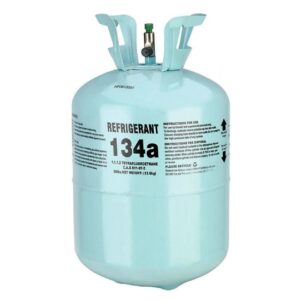
You will run into a few HFO names. R-1234yf and R-1234ze are pure HFOs used mostly in automotive and commercial refrigeration. In home comfort systems, the more common approach is a blend – R-454B and R-32 mix HFO and HFC components to hit the sweet spot of efficiency, safety, and low GWP. If you want a broader look at the greener options entering the market, our overview of eco-friendly refrigerants covers the full landscape.
From R-410A to A2L: The 2025 Refrigerant Change
The move toward HFOs is driven by federal regulation. The American Innovation and Manufacturing (AIM) Act of 2020 directs the EPA to phase down HFC production 85% by 2036. As part of that effort, new residential air conditioners and heat pumps manufactured starting January 1, 2025 must use a refrigerant with a GWP under 700. R-410A, the standard for the last two decades, has a GWP around 2,088 – well over that limit – so it is being phased out of new equipment.
The replacements are R-454B (GWP near 466) and R-32 (GWP near 675). Both are classified A2L, which means they are mildly flammable. That sounds alarming, but A2L refrigerants are difficult to ignite and require specific conditions to burn. New equipment is engineered with leak detection and matching safety features, and only an EPA 608-certified technician should ever open a sealed refrigerant system.
What the Change Means for Front Range Homeowners
Our hot, dry Front Range summers regularly push into the 90s°F, and a dependable air conditioner or heat pump is not a luxury here. The refrigerant transition does not change that – it changes what sits inside your next system. Here is how it shakes out depending on where you stand today.
If You Own an R-410A or Older System
Do not panic, and do not rush to replace a working unit. R-410A is not banned. It is still legal to service, and supplies will remain available for existing systems for years to come. If your air conditioner is running fine, keep it and maintain it. A system installed within the last decade in a Parker or Castle Rock home likely has plenty of service life left.
Older R-22 systems are a different story. R-22 production ended January 1, 2020, so any remaining supply is recycled or reclaimed, and prices climb every season. If you own an R-22 unit that needs a major repair, replacement usually makes more financial sense than paying for an expensive recharge on aging equipment.
If You Are Replacing Your System
A new installation in 2025 or 2026 will almost certainly use R-454B or R-32. You cannot mix refrigerants – an R-410A system cannot simply be topped off with R-454B, and A2L equipment is designed specifically for its refrigerant. When you replace one component, such as the outdoor condenser, it generally needs to be matched to a compatible indoor coil. That is one more reason to have the whole system evaluated by a licensed contractor rather than swapping parts piecemeal.
Do HFOs Lower Your Energy Bills?
Here is where honest expectations matter. The refrigerant itself is not the main driver of your electric bill – system design, correct sizing, and the SEER2 efficiency rating do the heavy lifting. R-32 and R-454B let manufacturers build high-efficiency equipment, and a modern, properly sized heat pump or AC will almost always outperform a 15-year-old unit. But the savings come from the overall system and a correct installation, not from the refrigerant alone. At our altitude – Parker sits above 5,800 feet – accurate load calculations matter even more, since thinner air affects both cooling capacity and equipment performance.
Frequently Asked Questions
Do I need to replace my R-410A air conditioner?
No. R-410A is not banned and remains available to service existing systems. If your unit works well, keep maintaining it. The 2025 rules apply to newly manufactured equipment, not to the system already in your home.
What refrigerant do new AC systems use in 2025 and 2026?
Most new residential systems use R-454B or R-32, both low-GWP A2L refrigerants that rely on HFO technology. Which one you get depends on the manufacturer and the specific model.
Are A2L refrigerants safe in my home?
Yes. A2L refrigerants are only mildly flammable and are difficult to ignite. New equipment includes leak detection and other safeguards, and installation by an EPA-certified technician keeps the system sealed and operating safely.
Can I still get my R-22 or R-410A system serviced?
Yes. R-410A service will continue for the foreseeable future. R-22 is no longer produced, so recharges rely on reclaimed supply and grow costly each year – if a major repair is needed on an R-22 unit, replacement is usually the smarter investment.
Talk to a Licensed Colorado HVAC Team
The refrigerant transition is real, but it does not have to be confusing. Whether you are maintaining an R-410A system, weighing a repair on an aging R-22 unit, or ready to install a new high-efficiency heat pump built for cleaner refrigerants, 1st Choice Pro Services can walk you through the right choice for your home and budget. Our licensed, bonded, and insured team serves Parker, Castle Rock, Castle Pines, Centennial, and Highlands Ranch. Call 303-841-1448 to schedule an evaluation with a technician who will explain your options in plain language, not sales pressure. You can also learn more about the greener systems available in our guide to eco-friendly refrigerant solutions.

Key Takeaways
Moving your sink to an island increases your kitchen’s workflow by centralizing prep and clean-up, diminishing perimeter…

Key Takeaways
Understand typical issues such as drain clogs, incorrect installation, and pump or hose malfunctions to target fixes where…