
Eco-Friendly Refrigerants: A Guide for Front Range Homeowners
Eco-friendly refrigerants are cooling fluids with a low global warming potential (GWP) that keep your home comfortable without the heavy climate impact of older chemicals. In residential HVAC across Colorado’s Front Range, the practical eco-friendly choices are R-32 and R-454B – the low-GWP refrigerants now replacing R-410A in new air conditioners and heat pumps. Natural refrigerants like carbon dioxide and ammonia serve mostly commercial and industrial systems.
This guide is written for Parker, Castle Rock, Castle Pines, Centennial, and Highlands Ranch homeowners weighing a repair or a new system – not for plant operators. 1st Choice Pro Services is a licensed, bonded, and insured plumbing and HVAC contractor based in Parker, CO, and our EPA-certified technicians work with these refrigerants every day. Here is what the shift to greener refrigerants actually means for your home.
What Makes a Refrigerant “Eco-Friendly”?
Two numbers tell you how a refrigerant treats the environment. Ozone depletion potential (ODP) measures whether it damages the ozone layer, and global warming potential (GWP) measures how much heat it traps compared to carbon dioxide, which is set at a baseline of 1. A refrigerant with a GWP of 2,000 traps 2,000 times more heat, pound for pound, than CO2 if it escapes into the atmosphere.
Modern refrigerants no longer damage the ozone layer, so today’s push is all about GWP. The refrigerant in most Front Range homes right now, R-410A, has a GWP of about 2,088. The older R-22 (often called Freon) that it replaced sits around 1,810. “Eco-friendly” simply means dropping that number dramatically, which is exactly what the newest home refrigerants do.
Eco-Friendly Refrigerants List for Home HVAC
When people search for an eco-friendly refrigerants list, most sources bury the two that actually matter for a house under a pile of industrial chemicals. Here are the ones that belong in a residential conversation.
R-32
R-32 is a single-component refrigerant with a GWP of about 675 – roughly a third of R-410A. It moves heat efficiently, so a system can use less refrigerant to do the same job. Many ductless mini-split heat pumps, a popular choice for Colorado homes with room additions or no existing ductwork, already run on R-32.
R-454B
R-454B (sold under names like Puron Advance) has an even lower GWP of about 466. It is the refrigerant several major manufacturers chose for their 2025 central air conditioners and heat pumps, so it is what you are most likely to get in a new split system installed in Parker or Castle Rock today.
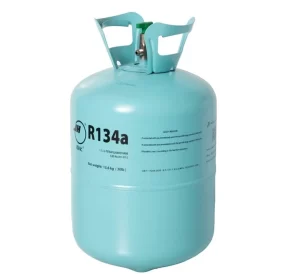
Natural Refrigerants: CO2, Ammonia, and Hydrocarbons
Carbon dioxide (R-744, GWP of 1), ammonia (R-717, GWP near 0), and hydrocarbons like propane (R-290) and isobutane (R-600a) have the lowest GWP of all. You will not find them in a typical whole-home system, though. Ammonia is toxic and reserved for large industrial cold storage, CO2 runs at very high pressure in supermarket refrigeration racks, and hydrocarbons are flammable and used only in small sealed appliances like your kitchen refrigerator. They are genuinely green, just not built for residential comfort cooling.
The 2025 Refrigerant Change and What It Means Here
Under the federal AIM Act, the EPA now limits new residential air conditioners and heat pumps to refrigerants with a GWP below 700. As of January 1, 2025, manufacturers can no longer build home systems that use R-410A – new equipment ships with R-32 or R-454B instead. This is the same kind of transition that retired R-22 back in 2020.
These newer refrigerants carry an A2L safety rating, which means they are mildly flammable. In practice that is a non-issue for homeowners: the charge stays sealed, A2L systems include built-in leak detection, and they require technicians who are trained and certified to work on them. It does mean this is not the place for DIY refrigerant work – handling A2L refrigerant safely takes proper recovery tools and training.
Replacing an AC or Heat Pump on the Front Range
Our hot, dry summers push air conditioners hard from June through August, and more homeowners are pairing cooling with a cold-climate heat pump for efficient winter heating. If you install new equipment now, it will already use a low-GWP refrigerant – there is no separate “green upgrade” to buy on top of the system.
If your current unit still runs on R-410A or even R-22, you do not need to panic-replace it. A well-maintained system can keep going, and R-410A will remain available for service for years. The smart move is to replace on your own schedule, when the equipment is near the end of its life, rather than reacting to a refrigerant leak in the middle of July.
One local detail worth knowing: Parker sits near 5,900 feet of elevation, and correct refrigerant charging matters even more at altitude. Thinner air changes how a system sheds heat, so a proper install means charging to the manufacturer’s specifications for our conditions instead of a rule-of-thumb fill. That is the difference between a system that hits its rated efficiency and one that quietly runs up your summer electric bill.
Frequently Asked Questions
Is R-410A being banned?
New home systems can no longer be manufactured with R-410A as of 2025, but existing R-410A equipment is completely legal to keep, repair, and recharge. The refrigerant remains available for servicing systems already installed in homes.
Are R-32 and R-454B safe for my home?
Yes. Both are rated A2L, meaning only mildly flammable, and the refrigerant stays sealed inside the system. New equipment adds leak detection as an extra safeguard. The important part is having an EPA-certified technician install and service it correctly.
Do I need to replace my working air conditioner right now?
No. If your current AC or heat pump is running well, there is no requirement to replace it. Plan your upgrade around the equipment’s age and condition, and you will naturally move to a low-GWP refrigerant when that time comes.
Which is more eco-friendly, R-32 or R-454B?
Both are large improvements over R-410A. R-454B has the lower GWP of the two (about 466 versus 675 for R-32), while R-32 tends to use slightly less refrigerant per system. Either one is a strong, code-compliant choice for a Colorado home.
Talk to a Local HVAC Team
Choosing the right refrigerant really comes down to choosing the right system and the right installer for your home and our Front Range climate. Whether you are troubleshooting an older R-410A unit or planning a new low-GWP air conditioner or heat pump, 1st Choice Pro Services can walk you through the options in plain terms. Call our Parker, CO office at 303-841-1448 to schedule service or a free replacement estimate with an EPA-certified technician.
Key Takeaways
Understand typical issues such as drain clogs, incorrect installation, and pump or hose malfunctions to target fixes where…
Key Takeaways
We recommend changing your evaporator pad at least once a year, prior to the heating season. Coordinate the change with…